- UEI: ZZVQCUPCGL3 CAGE: 9UK94
- +1 844-539-2555
- Sales@NationalBatterySupply.com

How Long Car Batteries Last? How Often To Replace Them?
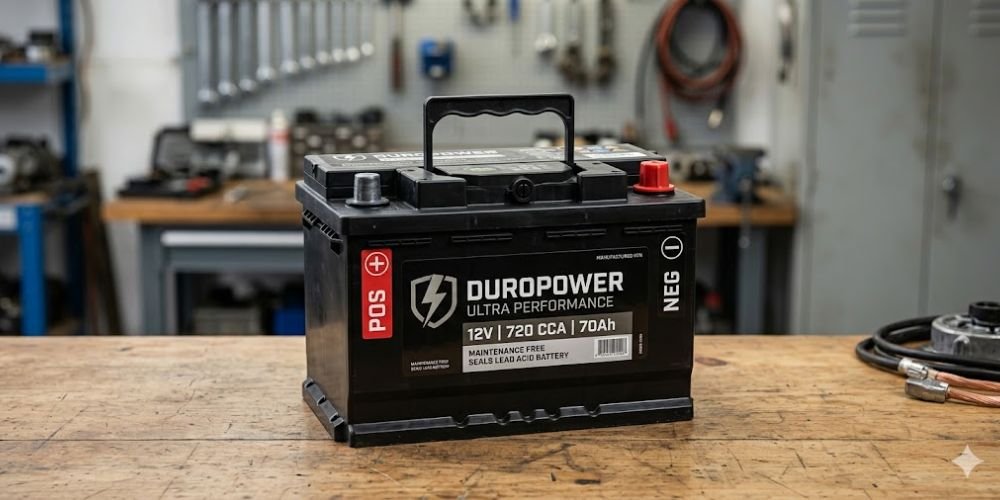
There’s a specific kind of frustration that comes with a dead car battery. For one thing, it’s the fact that you had no idea it was coming. One day it worked fine, the next morning it didn’t and now you’re standing in a cold driveway wondering what you missed.
Here’s the thing though. You probably missed the signs because nobody told you what to look for. That changes today.
National Battery Supply fields these questions from drivers all the time, so this is the real version of the conversation, not the sanitized one.
How Long Does a Car Battery Last?
Three to five years is the range most drivers land in. Not a marketing estimate, just what actually plays out across millions of cars in real conditions.
Now, AGM batteries are their own thing. They show up in newer vehicles that use start-stop systems and they do tend to last longer. Six, maybe seven years for some. But lean on the conservative end when you’re planning. The best case scenario isn’t something you want to count on.
Climate is the variable most people underestimate completely.
Living Somewhere Hot? Your Battery Feels It
Heat is the quiet villain here. Parking outside in a place that regularly hits triple digits means your battery is dealing with internal stress that someone in a cooler climate simply isn’t. The damage doesn’t show up overnight. It accumulates across seasons, slowly eating away at capacity until one summer the battery just doesn’t bounce back the way it used to.
Cold Weather Doesn’t Kill Batteries, It Exposes Them
January gets blamed for a lot of battery deaths that actually started in September. Cold engines need a much heavier pull of power to fire up. If a battery is already limping along at partial strength, that winter morning demand is just too much.
The cold revealed the problem. It didn’t cause it.
The Everyday Habits That Chip Away at Battery Life
Short Trips Do More Damage Than People Expect
Each time you start the engine, the battery gives up some charge. The alternator then works to put it back while you drive. A ten minute round trip to grab coffee doesn’t give the alternator nearly enough time to square things up.
Run that pattern five days a week for a couple years and the battery quietly loses ground it never fully recovers. By the time you notice sluggishness on startup, the capacity is already significantly reduced.
Accessories Running Off a Parked Car
Sitting in the driveway with the music on and the engine off, phone plugged in, fan running. That’s all pulling straight from the battery with nothing replenishing it. Doing that for half an hour here and there might feel harmless. Over months it chips away at the battery in ways you won’t notice until it matters.
What to Actually Watch For
Slow cranking is your first real signal. Beyond that, pay attention to:
- Headlights dimming when the car is sitting still at a light
- Windows or wipers moving slower than they normally do
- A battery warning light that keeps flickering on
- A battery casing that looks puffy or misshapen
The swollen casing is the one that needs immediate action. Heat has built up internally and that battery needs to come out now, not next week.
When Should You Actually Swap It Out?
Honestly, before it becomes a problem. Not after.
Get it tested when it hits the three year mark. Most auto parts shops do it at no cost and it takes about five minutes. Do it heading into summer or right before the first big cold snap. Those two windows are when weakened batteries finally break.
Replacing it on your own schedule costs far less, in every sense, than replacing it on the battery’s schedule.
The Small Stuff That Adds Real Time to Battery Life
Clean the terminals a couple times a year. Corrosion sits on those connections and slowly restricts the current without making a fuss about it. A little baking soda and water with an old brush handles it easily. It’s one of those boring tasks that quietly pays off.
Trickle chargers are worth having if your car sits for more than a week at a stretch. They keep the charge stable without pushing the battery too hard. Now, if your daily commute is mostly short hops, a longer drive once a week gives the alternator a real chance to fully recover the charge.
Before You Go
All in all, getting ahead of it just takes knowing what to look for and not pushing your luck past the three year mark.
That same principle, not waiting for something to fail before you care about it, applies to any battery you’re depending on regularly. Golf cart batteries are built for exactly that kind of reliability, dependable from the first use to the last.
Featured Posts
Request more information
National Battery Supply delivers dependable energy storage solutions tailored to commercial, industrial, and government applications. Our catalog ranges from custom battery manufacturing and UPS systems, portable power stations, to high-capacity solutions like whole-home battery energy storage systems (BESS) and scalable containerized energy storage units- engineered for reliability, flexibility, and rapid deployment.
We support critical infrastructure, telecom, data centers, healthcare, and remote operations with power systems built for performance in demanding environments. Whether it’s deep cycle batteries, lithium forklift replacements, OEM portable power kits, solar backups, and large-scale energy storage systems. We provide tailored solutions with short lead times, custom branding, and bulk pricing.
Our team also specializes in helping integrators, resellers, and developers source complete battery systems for residential microgrids, off-grid power stations, and industrial container setups. Whether you need to back up a home, energize a remote site, or manage facility-wide loads, we have the scalable energy storage options to match.
Contact us today to learn how our advanced power systems can reduce downtime, extend operational capacity, and support your long-term energy goals.

National Battery Supply is a reputable manufacturer specializing in custom battery solutions. With over 20 years of experience, we can manage all your power needs.
Batteries
Compliance
Copyright 2026 © National Battery Supply | UEI: ZZVQCUPCGL3 CAGE: 9UK94