- UEI: ZZVQCUPCGL3 CAGE: 9UK94
- +1 844-539-2555
- Sales@NationalBatterySupply.com
Amps, Volts, Watts: What’s The Difference
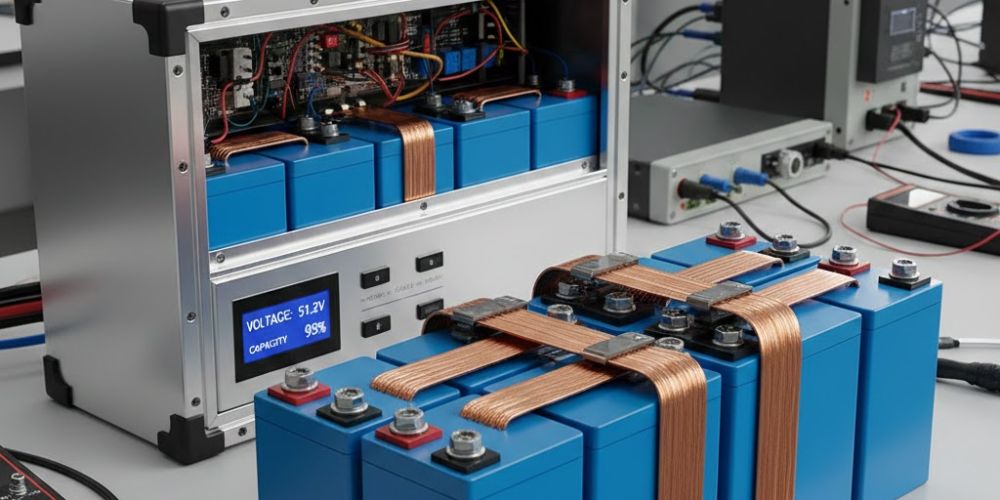
For a vast number of the population, it’s tricky to understand basic electrical terms like amps, volts, and watts. At the same time, it isn’t especially when you’re trying to figure out which battery type is suitable for your vehicle, equipment, or backup power setup.
No less, it is not only helpful to know the difference, but it is also necessary to make smart choices and avoid making mistakes that could drain excess finances.
Every day, we help customers at National Battery Supply choose the right batteries. For you see, we know that one of the most common concerns customers have is not knowing how to measure electricity.
As we accompany you through this guide, you will realize how amps, volts and watts affect batteries. To say more, it’ll aid with smarter choices about how much power you need, depending on the situation.
1. Understanding the Basic Terminologies
Without any arguments, no matter what you use your battery system for—cars, RVs, golf carts, solar systems or industrial equipment—these basic electrical units affect how well it works and how safe it is.
When Customers Don’t Get The Fundamentals it leads to confusing decisions like:
- What kind of amps do they need?
- How does voltage affect compatibility?
- How Watts Figure Out Total Power?
For you see, it all means you have:
- Picking the wrong size battery
- Electrical systems that don’t have sufficient power
- Your Equipment breaking down too soon
- Lastly, even in situations that could be dangerous.
So, let’s make things easier.
2. Volts (V): The Force Involving The Power Output
To ask first with yourself, what does voltage mean?
Speaking about the uncommonly known matter, Voltage is measurable by the unitvolts (V). Furthermore, it is the electrical pressure that moves electrons through a circuit.
An easily digestible example can be by thinking of voltage as the same thing as water pressure that flows in a pipe. Moreover, a high voltage range pushes more electricity, while a high water pressure obviously pushes more water.
Why Batteries Need Voltage
The voltage of a battery tells you how good it is. Some common battery voltages are:
- 12 volts (for cars, boats and RVs)
- 24 and 48 volts (for bigger cars and solar panels),
- 6 volts (some golf carts and deep cycle batteries).
If the voltage isn’t what your equipment needs:
- The device won’t work.
- It could also work poorly or be dangerous.
To understand, the standard voltage for a car’s electrical system is 12 volts most of the time. In addition, if the system isn’t adjustable for it, a 24V battery won’t do any benefit when installing it.
3. Amps (A): The Amount of Electricity That Flows
What is the current exactly? Or amps for Short?
To start explaining about it, Amps are units that measure how quickly electrical charges flow.
Keep the water analogy In Mind:
Again, voltage is similar to water pressure. Now, amps show how much water is flowing through the hose.
Why Amps Are Necessary for Batteries
- More current results in more amperage.
- More amps are needed for devices that need more power.
There are two important amp ratings for batteries.
Amp Hours (Ah) tell you how much current a battery can give over time.
Cold Cranking Amps (CCA) is the amount of electricity a battery can give off right away when it’s cold. In fact, this is important for starting a car.
Myth Revamped: Understanding Amps Isn’t Necessary
A common myth is that bigger amps are always better. That is not true because you:
- need the right amps for the job.
- The device won’t last long if the battery is too low.
- Too high is usually fine from an electrical point of view, but it costs more and is heavier.
4. Watts: A Way To Measure Realistic Power Systems
Now, What Are Watts?
Watts is a unit that measures power output involving the amount of power that flows through a circuit.
Equation:
Watts = Volts × Amps
So, if you have:
12 volts and 10 amps,
That means it has 120 watts of power.
Why Watts Are Important
Watts tell you how much work a device can really do.
For you see, even when the voltage is the same, a 100W light bulb utilizes more electricity than a 10W bulb.
Therefore, as far as battery systems are concerned, watts are meant for scaling inverters, which change DC from a battery to AC for home electronics.
5. How to Avoid The Majority Of Mistakes When On A Purchase?
- Firstly, don’t try to buy a battery that has more voltage than the required limit. To explain, if you place a 24V battery into a device that runs on 12V without making any changes, nothing happens at all.
- Next, the answer is to always make sure the battery voltage matches the equipment requirement.
- Choosing a battery with a doubtful rating due to uncertainty.
For one thing, if you aren’t even knowledgeable about how many amps you need, you won’t understand how a battery that says “100 Ah”, you won’t get the accurate proof on how long it will last.
6. Why National Battery Supply Can Help You
For starters, we know a lot about batteries at National Battery Supply in terms of professional depth. As well as how we understand how confusing electrical specifications can be for people lacking deep experience with it. So, if you are:
- Changing out a marine battery.
- Setting up a backup system with solar power.
- Get a new battery bank for your golf cart.
- Or, giving tools power on the job site.
We can help you get the voltage needed without delay.
What Do You Need Right Now?
Watts needed for power.
AND how all of this affects the choice of LifePo4 batteries, its performance and its price.
Advice From Experts For Free
Overall, we not only sell batteries but also guide many of our buyers on how to choose the other suitable when starting new. So yes, you:
✔ Don’t use equipment that doesn’t work with it.
✔ Don’t get your money wasted.
Now, with our expertise, you receive help as you understand each specification and how it relates to your situation.
Conclusion
On the whole, try absorbing as much information that can aid you practically.
In fact, no matter how experienced you are at DIY or how new you are to it, learning these rules will help you get more long-lasting power. Hence, it starts from the batteries you buy.
Now, if you need to pick the right battery, you can check The National Battery Supply for further expertise and assistance.
Featured Posts
Request more information
National Battery Supply delivers dependable energy storage solutions tailored to commercial, industrial, and government applications. Our catalog ranges from custom battery manufacturing and UPS systems, portable power stations, to high-capacity solutions like whole-home battery energy storage systems (BESS) and scalable containerized energy storage units- engineered for reliability, flexibility, and rapid deployment.
We support critical infrastructure, telecom, data centers, healthcare, and remote operations with power systems built for performance in demanding environments. Whether it’s deep cycle batteries, lithium forklift replacements, OEM portable power kits, solar backups, and large-scale energy storage systems. We provide tailored solutions with short lead times, custom branding, and bulk pricing.
Our team also specializes in helping integrators, resellers, and developers source complete battery systems for residential microgrids, off-grid power stations, and industrial container setups. Whether you need to back up a home, energize a remote site, or manage facility-wide loads, we have the scalable energy storage options to match.
Contact us today to learn how our advanced power systems can reduce downtime, extend operational capacity, and support your long-term energy goals.

National Battery Supply is a reputable manufacturer specializing in custom battery solutions. With over 20 years of experience, we can manage all your power needs.
Batteries
Compliance
Copyright 2026 © National Battery Supply | UEI: ZZVQCUPCGL3 CAGE: 9UK94