- UEI: ZZVQCUPCGL3 CAGE: 9UK94
- +1 844-539-2555
- Sales@NationalBatterySupply.com

Can We Put a LiFePO4 Battery in Our Car?
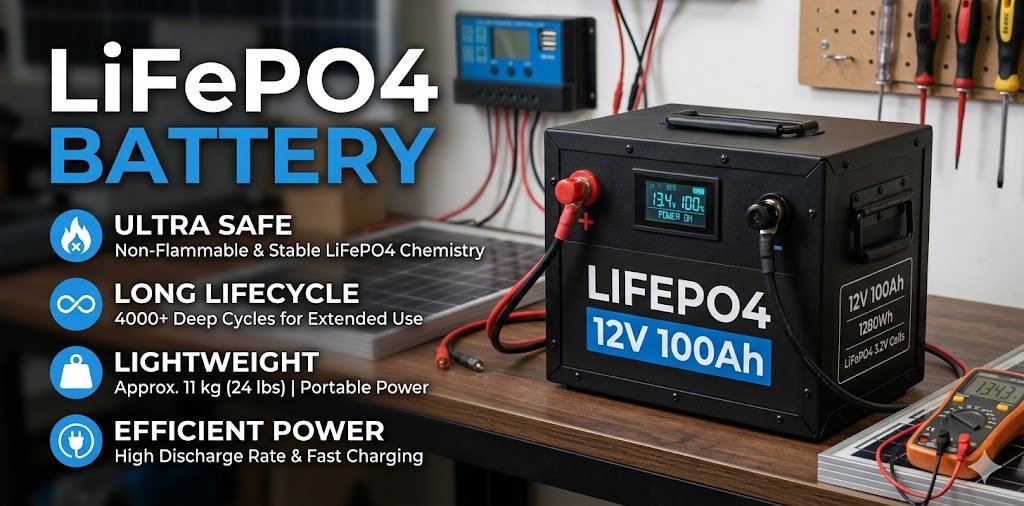
Yeah, you can. Most cars take one just fine.
But there is a version of this that goes wrong pretty regularly and it is not because the battery was bad. Someone buys one, installs it and then spends three weeks confused about why it is not charging right. Turns out their alternator runs low voltage. Or they had a smart alternator and nobody mentioned that was even a thing to check.
Ten minutes of homework prevents all of that. National Battery Supply is going to walk through it properly.
What Even Is a LiFePO4 Battery
Lithium iron phosphate. That is what the name breaks down to. It is the chemistry inside the battery and it matters because it behaves differently from other lithium types. More stable. Less prone to overheating. The kind of chemistry that does not make the news for the wrong reasons.
One thing worth clearing up before going further. There are two types of lithium batteries and mixing them up is a common mistake.
Deep cycle lithium batteries are built for slow, sustained discharge over hours. RVs. Solar setups. Trolling motors. Not for starting engines.
LiFePO4 cranking batteries are built to dump a large burst of current fast enough to spin a starter motor and then recharge through the alternator. That is the one a car needs. Using the wrong type is not a minor issue. It just will not do the job.
Can It Actually Start a Gas Car
Yes. Honestly the performance difference over lead-acid is not subtle.
Better cold cranking amps. Faster recharge. Lifespan that runs two to four times longer depending on the battery and how the vehicle is used. Some models come with Bluetooth so voltage can be checked from a phone without popping the hood. Some have an emergency start function that revives a completely dead battery without jump leads.
That last feature sounds unnecessary right up until the battery dies in a car park at night with no one around.
Things to Check Before Buying
Not every car is a straight swap. A few things are worth looking into first.
Alternator voltage. Most LiFePO4 car starter batteries want to see between 13.9V and 14.6V from the alternator to charge properly. Below that range consistently and the battery will never hit full capacity. A basic multimeter check takes about two minutes.
Smart alternators. Some newer cars use a variable voltage alternator to cut fuel consumption. These systems deliberately drop charging voltage in certain conditions. That creates undercharging problems with lithium batteries. Worth finding out if the car has one before buying anything. A mechanic can check this quickly.
Cold cranking amps. The new battery needs to match or beat the CCA rating of the original. Most automotive LiFePO4 options handle this easily but checking the spec first is just sensible.
Older cars. Some were tuned specifically around lead-acid chemistry. Usually still compatible but worth a quick check of the manual or a call to the supplier before committing money.
What About Electric Vehicles
Not applicable. A completely different situation.
EVs do not have a combustion engine so there is nothing to crank. The traction battery that powers the motor is a completely separate high-voltage system. Some EVs carry a small 12V auxiliary battery for cabin electronics and control systems but that has different requirements and a LiFePO4 cranking battery is not the right fit for it either.
This section exists because the question genuinely gets asked. For petrol and diesel vehicles, keep reading. EV owners, this article is not for them.
Cold and Heat, How It Handles Both
Cold Weather
Cold is the honest sticking point for lithium batteries. Charging them below freezing without protection causes permanent cell damage. That is not a theoretical risk. It actually happens.
Good LiFePO4 automotive batteries have a built-in heater that fixes this. When the battery detects incoming charge current in cold conditions, the heater kicks on first, warms the cells to a safe temperature and only then allows charging to begin. Automatic. No driver input required.
In climates where winter is genuinely cold, this is not a nice-to-have. It is the thing to look for before buying.
Hot Weather
Hot is actually where LiFePO4 does better than lead-acid. The chemistry handles heat more stably, voltage stays more consistent and internal wear from sustained high temperatures is slower. A decent battery management system adds thermal regulation on top of that. Lead-acid in the same conditions degrades faster and needs water top-ups and more frequent replacement.
Does the Cost Make Sense
LiFePO4 costs more upfront. That is real and worth being straight about.
A standard lead-acid battery needs replacing every three to five years under normal conditions. In extreme climates, sometimes sooner. LiFePO4 batteries regularly hit eight to ten years. Over a decade of owning the same vehicle, that means fewer replacements, zero maintenance, no acid corrosion on terminals to deal with, no sulfation from the battery sitting at partial charge for too long.
They also charge more efficiently. Lower internal resistance means the alternator brings the battery back up after a start without working as hard. That reduced load adds up over time.
The upfront cost is higher. Everything after that tends to be cheaper.
Installing One at Home
For most standard vehicles this is not a complicated job.
Car completely off. Keys out of the ignition. Disconnect the negative terminal first, then positive. Lift out the old battery. Lead-acid units are heavy so this is the least enjoyable part. Clean any corrosion from the tray and terminal connectors before anything new goes in.
LiFePO4 batteries are lighter than lead-acid by a meaningful amount so there can be some wobble in the factory tray. A spacer or small bracket handles that. Set the new battery in. Connect positive first, then negative. Tighten both connections properly.
Start the car. If the battery has Bluetooth monitoring, open the app and check the voltage reading.
That is it for most cars. No specialist equipment. No reprogramming. Just basic work anyone can do.
Conclusion
For petrol and diesel vehicles, a LiFePO4 battery is a legitimate upgrade. Not a marginal one either. The weight, the lifespan, the performance in cold and heat. all of it is genuinely better than conventional lead-acid across most real-world conditions.
The only thing standing between a smooth install and a frustrating one is the homework. Check the alternator voltage. Confirm the CCA rating. Find out if the car has a smart alternator. Those three checks take maybe fifteen minutes and they answer almost every compatibility question.
For anyone ready to make the move, the LiFePO4 batteries at National Battery Supply cover the full range of automotive options with the specs laid out clearly enough to get the right match before placing an order.
Featured Posts
Request more information
National Battery Supply delivers dependable energy storage solutions tailored to commercial, industrial, and government applications. Our catalog ranges from custom battery manufacturing and UPS systems, portable power stations, to high-capacity solutions like whole-home battery energy storage systems (BESS) and scalable containerized energy storage units- engineered for reliability, flexibility, and rapid deployment.
We support critical infrastructure, telecom, data centers, healthcare, and remote operations with power systems built for performance in demanding environments. Whether it’s deep cycle batteries, lithium forklift replacements, OEM portable power kits, solar backups, and large-scale energy storage systems. We provide tailored solutions with short lead times, custom branding, and bulk pricing.
Our team also specializes in helping integrators, resellers, and developers source complete battery systems for residential microgrids, off-grid power stations, and industrial container setups. Whether you need to back up a home, energize a remote site, or manage facility-wide loads, we have the scalable energy storage options to match.
Contact us today to learn how our advanced power systems can reduce downtime, extend operational capacity, and support your long-term energy goals.

National Battery Supply is a reputable manufacturer specializing in custom battery solutions. With over 20 years of experience, we can manage all your power needs.
Batteries
Compliance
Copyright 2026 © National Battery Supply | UEI: ZZVQCUPCGL3 CAGE: 9UK94