- UEI: ZZVQCUPCGL3 CAGE: 9UK94
- +1 844-539-2555
- Sales@NationalBatterySupply.com
How to Charge a LiFePO4 Battery?
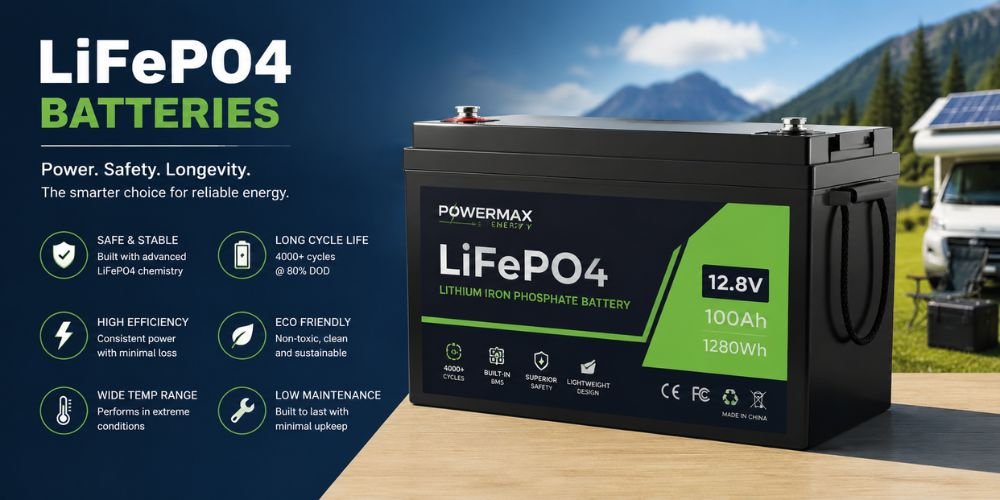
A LiFePO4 battery is easy to live with when it is charged the right way. The trouble starts when it gets treated like an old lead acid battery. Same-looking box. Same two terminals. Different rules inside.
A charger may light up and still be the wrong match. That is why battery owners using RV power, marine batteries, backup systems, or solar storage often check the charging setup before blaming the battery. National Battery Supply gives buyers a practical place to compare power options, but the charging habit still has to be right at home, in the garage, or out at camp.
Get the Charger Right
The charger is not a side detail. It is the main thing.
A LiFePO4 battery needs a charger made for lithium iron phosphate batteries. A lead acid charger may work for a while, but that does not make it safe for long-term use. Some older chargers use float, repair, pulse, or desulfation modes. Those modes were built for a different battery type.
For many 12V LiFePO4 batteries, the full charge voltage is often around 14.4V to 14.6V. Still, the battery label or manual should make the final call. Guessing with lithium batteries is never smart.
Why the Profile Matters
LiFePO4 batteries like a cleaner charging pattern. The charger sends steady current first. Then it holds the correct voltage while the battery finishes charging. After that, it should slow down or stop.
That sounds simple, but it is exactly where the wrong charger fails. It may stop too early. It may keep pushing when it should back off. It may confuse the battery management system and make a healthy battery seem faulty.
Connect It Like It Matters
Charging should happen on a dry, stable surface. No loose tools near the terminals. No damp floor. No rushed clamp work.
Positive connects to positive. Negative connects to negative. The cable ends should sit firm, not half loose. A poor connection can heat up, charge slowly, or cut in and out.
Portable systems can feel simpler because the controls are built in. Still, a portable power station should be used within its input limits with clean plugs and the right charging source.
Solar Setups Need Care
Solar charging is where small mistakes hide. The panel is not the full system. The charge controller tells the battery how to accept power.
A lithium battery needs a controller with a lithium setting or adjustable voltage. If the controller is left on a lead acid setting, charging can become uneven. Some batteries will not fill properly.
For off-grid systems, this guide on solar charge controllers is useful before panels and batteries are matched.
Cold Charging Can Damage Cells
Cold weather is a common trap. A LiFePO4 battery may still run equipment in cold conditions, but charging below freezing can damage the cells unless the battery has low temperature protection or internal heating.
This matters for RVs, boats, cabins and solar storage. A battery that sat outside in freezing weather should warm up before charging starts. That one habit can save trouble later.
Faster Is Not Always Better
LiFePO4 batteries can often charge faster than lead acid batteries, but fastest is not always best.
A moderate charger keeps heat lower and is easier on the battery. For a 100Ah battery, a 10A to 20A charger is often a comfortable everyday choice, unless the manual says something different.
Battery life is built through repeated habits. A simple look at battery cycles can help explain why charging too hard, draining too low, or storing poorly can affect long-term use.
Do Not Store It Empty
A LiFePO4 battery should not sit empty for weeks or months. It also does not need to sit fully charged the whole time.
For storage, many owners keep it around half charge or slightly higher. The battery should stay dry, clean and disconnected from anything that slowly drains it.
Conclusion
Remembering the core factors to aid for your LiFePO4 battery goes beyond just old lead acid habits into some lithium setup. In fact, it runs with technical steps for it’s sustainance. Use a proper lithium charger. Check the voltage. Keep the cables tight. Avoid freezing charge conditions. Recharge before the battery is pushed too low.
For RV, marine, solar storage, backup power and everyday energy needs, National Battery Supply offers LiFePO4 Batteries for owners who want cleaner power with less routine maintenance
Featured Posts
Request more information
National Battery Supply delivers dependable energy storage solutions tailored to commercial, industrial, and government applications. Our catalog ranges from custom battery manufacturing and UPS systems, portable power stations, to high-capacity solutions like whole-home battery energy storage systems (BESS) and scalable containerized energy storage units- engineered for reliability, flexibility, and rapid deployment.
We support critical infrastructure, telecom, data centers, healthcare, and remote operations with power systems built for performance in demanding environments. Whether it’s deep cycle batteries, lithium forklift replacements, OEM portable power kits, solar backups, and large-scale energy storage systems. We provide tailored solutions with short lead times, custom branding, and bulk pricing.
Our team also specializes in helping integrators, resellers, and developers source complete battery systems for residential microgrids, off-grid power stations, and industrial container setups. Whether you need to back up a home, energize a remote site, or manage facility-wide loads, we have the scalable energy storage options to match.
Contact us today to learn how our advanced power systems can reduce downtime, extend operational capacity, and support your long-term energy goals.

National Battery Supply is a reputable manufacturer specializing in custom battery solutions. With over 20 years of experience, we can manage all your power needs.
Batteries
Compliance
Copyright 2026 © National Battery Supply | UEI: ZZVQCUPCGL3 CAGE: 9UK94