- UEI: ZZVQCUPCGL3 CAGE: 9UK94
- +1 844-539-2555
- Sales@NationalBatterySupply.com
How to Survive a Power Outage at Home?
Somewhere between the lights flickering and the full realization that this is not going to fix itself in thirty seconds, most people make the same face. The slow look around the room. The check of the phone. The quiet inventory of everything that now does not work.
And then the fun part. Figuring out what to do next without having actually thought about it before. From here on, National Battery Supply will provide such an informative guideline as they have often done for their customers, along with the general masses.
Why This Catches People Off Guard Every Single Time
The average US household loses power for roughly five and a half hours per year. Not a huge number. Except when it lands during a winter storm or a brutal heat wave or right after a grocery run or when someone in the house uses medical equipment that runs on electricity.
Then five and a half hours feels very different.
The frustrating thing is that most of the problems caused by outages are not caused by the outage itself. They come from not having a basic plan. No stored water. Flashlight battery dead. Phone below 20 percent when it all starts. Nothing dramatic, just a series of small overlooked things that pile up quickly once the grid goes down.
The First Hour Is the One That Counts
Work Out What Is Actually Happening
Before doing anything else, step outside. Is the whole street dark? Are the neighbors out too? If yes, it is a grid issue. Call the utility company if someone has not already. If the street looks normal but the house is dark, that is a different problem entirely. Go check the breaker box before assuming the worst.
Pull the Plugs
When power comes back, it does not come back gently. There is a surge. That surge can kill televisions, computers and anything sensitive still plugged into the wall. Unplug them. Leave one switched lamp on somewhere so it is obvious when things are restored.
Leave the Fridge Alone
This is harder than it should be. A closed refrigerator holds temperature for around four hours. A full freezer holds for about 48 hours if nobody opens it. Both of those windows shrink every time someone swings the door open out of habit. Decide early to eat from pantry items and leave cold storage completely alone until power returns.
No Combustion Indoors
Gas ovens do not heat houses. Grills are not indoor appliances. Generators belong outside, not in the garage, not near a window, at least 20 feet from any opening. Carbon monoxide gives no warning. No smell, no color, nothing. It is the rule that gets broken most during winter outages and the one with the worst consequences.
Food and Water Move Faster Than Expected
Food is actually simple once the rule is known. Refrigerated items above 40 degrees Fahrenheit for more than two hours get thrown out. Not smell-tested. Not eaten carefully. Thrown out. Getting food poisoning while the power is still out makes everything worse in ways that are hard to overstate.
Water is the one people forget about completely. It seems like it just comes from the tap regardless of what the power grid is doing.
City water is usually fine during short outages. Pumping stations run on electricity though and extended outages eventually catch up with them. Well pumps lose water almost immediately. One gallon per person per day is the baseline recommendation, minimum three days. Seven days covers serious weather. Filling bathtubs before a storm is still genuinely useful, especially for toilet flushing when pressure drops.
Temperature Is Where Extended Outages Turn Serious
Cold Weather
Pick one room. Keep everyone in it. Close off the rest of the house. Body heat in a small insulated space does more than people expect. Layering clothing and blankets buys significant time before a house becomes genuinely dangerous. Newer homes hold heat longer. Older drafty ones lose it faster. It’s worth knowing the difference before being in that situation.
Hot Weather
Heat moves faster. Older adults and young children reach dangerous thresholds quicker than healthy adults realize. The lowest level of the house is the coolest. Wet cloth on the neck and wrists helps. If the indoor temperature climbs into genuinely unsafe territory, leaving is the right call.
Phones Die and Then the Real Problem Starts
Dim the screen immediately. Turn off wifi because it is looking for something that does not exist anymore. Both of these stretch battery life noticeably. Not forever, just noticeably.
Write down important numbers on actual paper. A phone at zero percent does not remember anyone.
Battery-powered radios are not complicated. They are cheap. They get local emergency updates when the internet is unavailable. Most homes do not own one until they realize they should.
For anything beyond managing a phone through one outage, a portable power station is the piece of equipment that changes the experience entirely. Phones, laptops, medical devices, lights. No fuel. No generator running outside. Just stored energy that works when the grid does not.
Backup Power Is the Thing Worth Thinking About Now
There is a real gap between an annoying outage and a dangerous one. A CPAP machine stopping at 2 AM is not the same category as a dead phone. Refrigerated medication going warm over a weekend is not the same as spoiled leftovers.
UPS systems protect computers and sensitive equipment when power returns with a surge. They also provide a short clean window so devices shut down properly instead of cutting abruptly. For anyone running medical equipment or a home office, that small buffer matters.
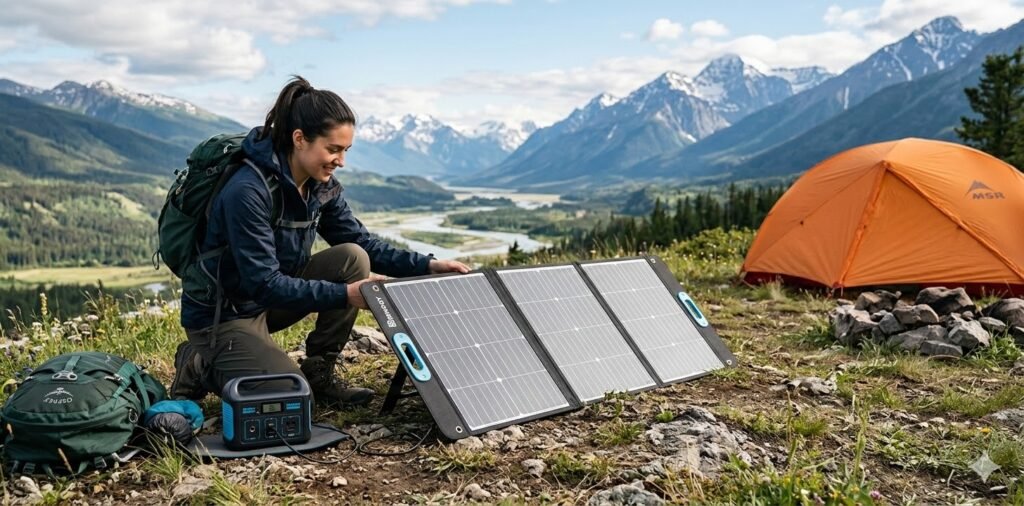
Solar adds the longer-term layer. A portable solar panel paired with a battery station keeps critical devices running through multi-day outages without waiting on utility crews to show up. The setup is not complicated. The only real requirement is deciding to have it before the next outage, not during it.
The homes that get through extended outages without serious disruption are not the lucky ones. They are just the ones that made a few decisions when the lights were still on.
Featured Posts
Request more information
National Battery Supply delivers dependable energy storage solutions tailored to commercial, industrial, and government applications. Our catalog ranges from custom battery manufacturing and UPS systems, portable power stations, to high-capacity solutions like whole-home battery energy storage systems (BESS) and scalable containerized energy storage units- engineered for reliability, flexibility, and rapid deployment.
We support critical infrastructure, telecom, data centers, healthcare, and remote operations with power systems built for performance in demanding environments. Whether it’s deep cycle batteries, lithium forklift replacements, OEM portable power kits, solar backups, and large-scale energy storage systems. We provide tailored solutions with short lead times, custom branding, and bulk pricing.
Our team also specializes in helping integrators, resellers, and developers source complete battery systems for residential microgrids, off-grid power stations, and industrial container setups. Whether you need to back up a home, energize a remote site, or manage facility-wide loads, we have the scalable energy storage options to match.
Contact us today to learn how our advanced power systems can reduce downtime, extend operational capacity, and support your long-term energy goals.

National Battery Supply is a reputable manufacturer specializing in custom battery solutions. With over 20 years of experience, we can manage all your power needs.
Batteries
Compliance
Copyright 2026 © National Battery Supply | UEI: ZZVQCUPCGL3 CAGE: 9UK94