- UEI: ZZVQCUPCGL3 CAGE: 9UK94
- +1 844-539-2555
- Sales@NationalBatterySupply.com

LiFePO4 Battery Lifespan: How Long Can They Really Last?
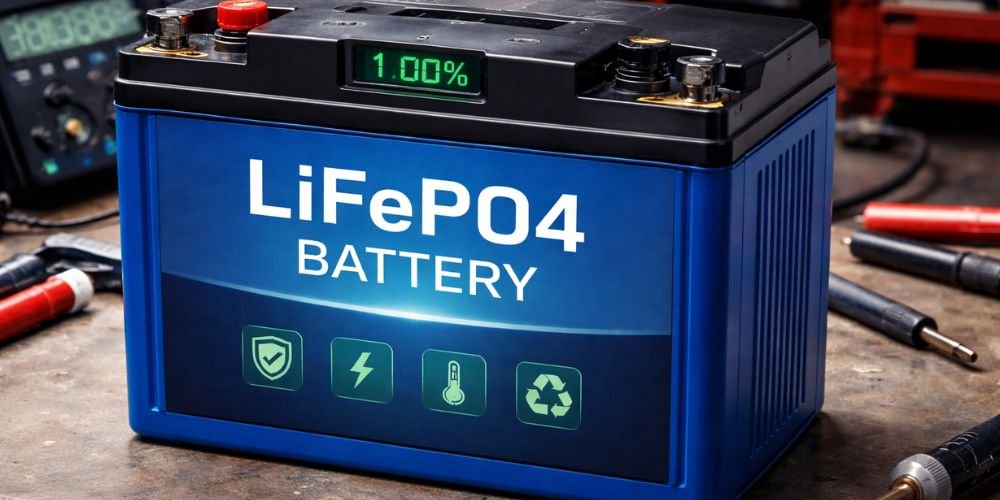
So someone told you LiFePO4 batteries last forever. That is a stretch. But they do last significantly longer than most people expect and longer than almost anything else on the market at a comparable price point when you factor in the full cost over time.
The real question is not just the number. It is what that number actually means for the way the battery gets used. National Battery Supply deals with these batteries across industrial builds, off-grid systems and commercial setups and the honest answer is that two batteries from the same production run can have wildly different lifespans depending on one thing: how they were treated.
Why LiFePO4 Holds Up When Other Batteries Do Not
There is a reason this chemistry became the go-to for serious energy storage applications. It is not just marketing.
Inside a LiFePO4 cell, the cathode is built around a structure called olivine. The bond holding it together involves phosphorus and oxygen and that bond is unusually strong. Other lithium chemistries, the cobalt-based ones especially, start breaking down at the cathode level as cycles accumulate. The structure shifts, capacity fades and eventually the battery just cannot hold what it used to. LiFePO4 resists that process far more effectively. Not completely. But enough to make a real difference across thousands of cycles.
It also runs cooler than most alternatives. Lower internal resistance means less heat generated during charge and discharge and heat is one of the main reasons batteries age prematurely. Less heat during operation translates directly into more cycles over the battery’s life.
The Numbers People Actually Want
Most LiFePO4 batteries are rated between 2,000 and 6,000 cycles. After that point, capacity typically drops to around 80% of the original. That is the standard end-of-life marker the industry uses.
To put that in real terms: a battery cycled once a day lands somewhere around 8 to 15 years of useful life. Backup batteries that only cycle occasionally can go well past that. Lead-acid packs, for comparison, are typically done between 300 and 500 cycles. That is not a small gap.
Lead-acid also cannot be drained past halfway without taking real structural damage. LiFePO4 handles deep discharges without the same consequence. In practice that means the usable portion of the battery is much larger, not just the rated capacity.
The Things That Cut Lifespan Short
This is where most of the problems actually come from. The battery is not the weak link. The habits around it usually are.
Draining below 10% regularly is one of the bigger ones. Every deep pull adds stress to the cells and it compounds. Do it enough times and the battery starts aging faster than the spec sheet implied.
Charging in cold weather is another one people underestimate. When temperatures drop below freezing and there is no internal heater in the system, lithium plating can form on the anode. That damage does not reverse. It sits there and quietly reduces how much the battery can hold from that point forward.
Using the wrong charger causes similar slow damage. LiFePO4 has a specific charge voltage ceiling that differs from other lithium types. A charger not designed for it can push past that ceiling and even mild repeated overcharge events add up across months and years.
Storing at full charge for extended periods is also rougher than most people realize. High state of charge during long storage periods accelerates cell aging, especially when the environment is warm. Parking the battery at roughly half charge before a long idle period is a small habit that pays off later.
What Actually Keeps These Batteries Going
None of the protective habits require anything complicated.
For everyday cycling, staying between 20% and 80% charge is easier on the cells than running them to the edges. The battery will hold more cycles over its lifetime if it is not being pushed to the limits on every single cycle. Full discharges occasionally are fine. Every single day is a different story.
Storage between uses should be around 50% charge in a reasonably cool space. Not a freezer. Just not a hot garage in the middle of summer.
Matching the charger to the chemistry matters more than people give it credit for. The right charge profile at the top of each cycle, every cycle, adds up to meaningfully fewer wear events across thousands of charges.
Charge rate is worth thinking about too. Lower C-rates generate less internal heat and the cells prefer that even if they can technically handle higher rates. When there is no rush, slow charging is just better for the battery.
A quality BMS handles a lot of this automatically. It watches voltage, temperature and state of charge in real time and cuts current before anything drifts into damaging territory. Understanding how that system actually works under the hood is worth the time and the breakdown of how a LiFePO4 BMS protects and extends battery life covers it in practical terms rather than marketing language.
Same Battery, Different Lifespan Depending on the Job
A solar storage battery cycled once a day wears very predictably. The math is almost linear once the operating conditions are stable. A marine battery used for a few months a year and then sitting idle faces a completely different set of stresses, mostly around self-discharge and what happens to cell balance during those long idle stretches.
Backup systems that almost never cycle at all can sometimes last two decades. The chemistry tolerates sitting well when stored properly.
Vehicle applications are their own category. Alternator voltage, charge profile compatibility and how the battery interacts with the rest of the vehicle’s electrical system all introduce variables that matter. It is not always a straight swap. Anyone planning to put LiFePO4 into a car should look into the specifics first. The post on whether a LiFePO4 battery actually works in a car runs through what works, what does not and what tends to catch people by surprise.
Signs the Battery Is Getting Old
LiFePO4 batteries rarely fail suddenly. They fade. Runtime gets shorter under the same loads. The battery charges faster than it used to, which sounds like a feature but usually means the usable capacity has shrunk. Voltage starts sagging earlier during discharge, so connected equipment shuts off before the pack is actually empty.
The BMS starts reporting cell imbalance more often. That is usually one of the clearer signals that cells are diverging in how much charge they can hold, which happens naturally but speeds up as the battery ages.
When these patterns become consistent across multiple cycles, the battery has probably reached that 70 to 80% capacity mark. Still usable for lighter applications. But if the original load demands have not changed, performance will feel noticeably degraded.
Conclusion
LiFePO4 batteries live up to their reputation when the conditions let them. The chemistry is genuinely stable in a way that competitors are not. What shortens the life is almost always external: wrong charger, poor storage, temperatures outside the safe range or discharge habits that grind the cells harder than necessary.
The full range of LiFePO4 batteries from National Battery Supply covers 12V through 48V configurations, Grade-A cells, integrated BMS and up to 5,000 rated cycles built for commercial and industrial demands. Getting the most out of any battery starts with matching it to the application correctly and managing it properly from day one. The potential is there. Whether it gets realized depends on what happens after the battery leaves the box.
Featured Posts
Request more information
National Battery Supply delivers dependable energy storage solutions tailored to commercial, industrial, and government applications. Our catalog ranges from custom battery manufacturing and UPS systems, portable power stations, to high-capacity solutions like whole-home battery energy storage systems (BESS) and scalable containerized energy storage units- engineered for reliability, flexibility, and rapid deployment.
We support critical infrastructure, telecom, data centers, healthcare, and remote operations with power systems built for performance in demanding environments. Whether it’s deep cycle batteries, lithium forklift replacements, OEM portable power kits, solar backups, and large-scale energy storage systems. We provide tailored solutions with short lead times, custom branding, and bulk pricing.
Our team also specializes in helping integrators, resellers, and developers source complete battery systems for residential microgrids, off-grid power stations, and industrial container setups. Whether you need to back up a home, energize a remote site, or manage facility-wide loads, we have the scalable energy storage options to match.
Contact us today to learn how our advanced power systems can reduce downtime, extend operational capacity, and support your long-term energy goals.

National Battery Supply is a reputable manufacturer specializing in custom battery solutions. With over 20 years of experience, we can manage all your power needs.
Batteries
Compliance
Copyright 2026 © National Battery Supply | UEI: ZZVQCUPCGL3 CAGE: 9UK94