- UEI: ZZVQCUPCGL3 CAGE: 9UK94
- +1 844-539-2555
- Sales@NationalBatterySupply.com

The Construction of the Li-ion Battery Pack
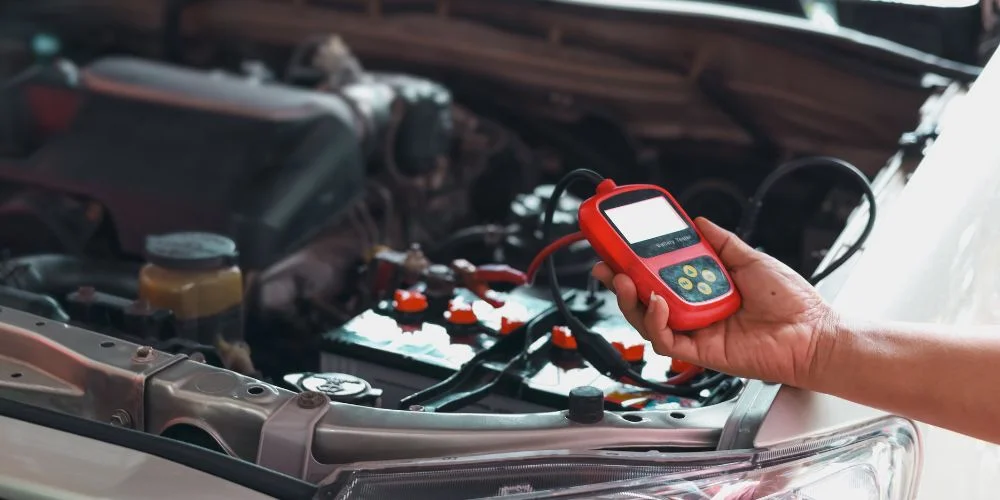
Li-ion battery packs drive everything from solar energy storage to forklifts, drones, and power tools. But most buyers overlook the fact that a battery pack isn’t just a bunch of cells. It’s a full electro-mechanical system.
Get the construction wrong, and you’re looking at shorter lifespan, overheating, or outright failure under load. That’s why pack quality matters as much as the cell chemistry inside. According to Holobattery and Semco Infratech, design flaws in mechanical structure, interconnects, or thermal layout are behind many early failures and safety issues in the field.
This guide walks you through what really makes or breaks a lithium-ion battery pack across key areas like structure, safety, performance, and cost. So let’s get to it without further ado.
From Cell to Pack and Why It All Adds Up
Every Li-ion pack starts with a choice: what’s your application demanding? Do you need high current for power tools, or long runtime for solar storage? Those decisions shape the pack from the inside out.
For applications requiring long-lasting energy delivery like off-grid setups or RVs engineers often turn to deep cycle batteries. These prioritize sustained performance over sudden bursts.
Cells are arranged in series to achieve voltage, and in parallel to hit capacity and current goals. Put simply: series adds volts, parallel adds amps. Formats matter, too. Cylindrical cells like the 18650 are known for stability and cost-efficiency. Pouch cells offer high density but require tight mechanical control. Prismatic cells are popular in EVs for their stackable form and better thermal contact.
Together, these format and configuration decisions affect everything such as size, cooling, weight, and price.
Now zoom out. A battery module combines cells. A full pack combines modules, electrical routing, safety layers, and a BMS to operate safely in your machine. Ignore these fundamentals and you’ll buy a pack that either underperforms or fails early.
Materials and Components That Make or Break Performance
A high-quality Li-ion battery pack (like LifePo4 batteries) starts with matched cells. Not just in chemistry, but internal resistance, voltage, and capacity. Why? Because mismatched cells age unevenly and cause imbalance, which can kill your pack early. Manufacturers like Panasonic and LG Chem test cells before pairing them.
Next come the interconnects. These are often nickel strips, copper, or aluminum busbars. How they are joined matters as well. Resistance welding is common because of their affordability, but laser welding offers lower resistance and longer durability.
Now think beyond the metal. A rugged enclosure, usually aluminum, steel, or polymer composite protects against shock, moisture, and temperature swings.
These unseen components are often where cheap packs cut corners, and where serious buyers should inspect closely.
What Cell Configuration Means for Voltage, Current, and Safety
Let’s talk power. Say you need a 48V pack for an electric scooter. That might mean 13 cells in series. But what if your motor pulls 60A continuously? You’ll need parallel strings to distribute that load.
This is where smart configuration matters. It’s not just S and P it’s S×P with the right conductor layout. Under high current, resistance isn’t just wasteful it generates heat. That’s why good packs use fat busbars, optimized routing, and minimum loop areas to keep resistance down and safety up.
Also important: pre-charge circuits, fuses, and contactors. These protect the rest of your system from inrush currents when you plug in or power up.
BMS: The Brain That Keeps the Pack Smart, Safe, and Reliable
Without a BMS, a Li-ion battery pack is flying blind. The Battery Management System monitors every critical parameter: individual cell voltage, total current, temperatures, state of charge, and even charge history.
In basic terms, it prevents overcharging, overdischarging, overheating, and shorts. In advanced packs, it also communicates via CAN or UART to other systems like inverters, controllers, or vehicle ECUs. Some even offer diagnostics and error logs.
Cell balancing whether passive or active is another key feature. It makes sure that weaker cells don’t overcharge or undercharge. They extend the pack’s life and prevent safety issues.
Quality Construction is the Foundation
It’s easy to focus on capacity or price when shopping for battery packs. But that’s like buying a house based on square footage without survielling the wiring or foundation.
Smart buyers and engineers know: construction quality is the foundation. It affects everything: performance, safety, repairability, lifespan, and compliance. And it’s where low-cost options often hide their worst flaws.
The good news? You don’t have to guess. You can ask the right questions, inspect the right components, and work with suppliers who build for your use case, not the lowest bid.
At National Battery Supply, we guide you through that process. Just bring your voltage, load profile, size constraints, and performance goals. We’ll help you build a battery system that does more than just power up. It delivers.
Featured Posts
Request more information
National Battery Supply delivers dependable energy storage solutions tailored to commercial, industrial, and government applications. Our catalog ranges from custom battery manufacturing and UPS systems, portable power stations, to high-capacity solutions like whole-home battery energy storage systems (BESS) and scalable containerized energy storage units- engineered for reliability, flexibility, and rapid deployment.
We support critical infrastructure, telecom, data centers, healthcare, and remote operations with power systems built for performance in demanding environments. Whether it’s deep cycle batteries, lithium forklift replacements, OEM portable power kits, solar backups, and large-scale energy storage systems. We provide tailored solutions with short lead times, custom branding, and bulk pricing.
Our team also specializes in helping integrators, resellers, and developers source complete battery systems for residential microgrids, off-grid power stations, and industrial container setups. Whether you need to back up a home, energize a remote site, or manage facility-wide loads, we have the scalable energy storage options to match.
Contact us today to learn how our advanced power systems can reduce downtime, extend operational capacity, and support your long-term energy goals.

National Battery Supply is a reputable manufacturer specializing in custom battery solutions. With over 20 years of experience, we can manage all your power needs.
Batteries
Compliance
Copyright 2026 © National Battery Supply | UEI: ZZVQCUPCGL3 CAGE: 9UK94