- UEI: ZZVQCUPCGL3 CAGE: 9UK94
- +1 844-539-2555
- Sales@NationalBatterySupply.com
What Are Molten-Salt Batteries?
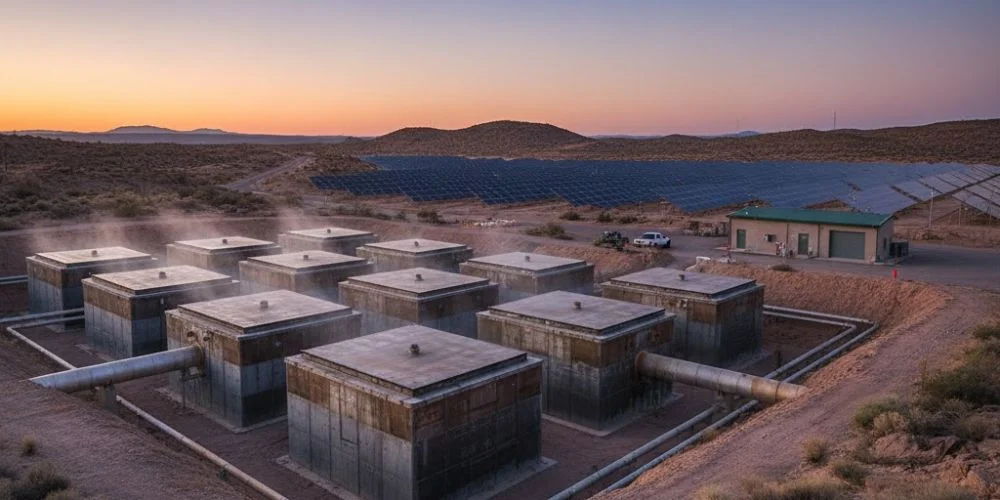
Molten-salt batteries store energy using high-temperature salts like sodium-sulfur or sodium-nickel-chloride. They run between 200 to 600°C. That makes them perfect for large-scale systems where lithium-ion struggles to stay cool or safe.
Two main types exist today: thermal batteries, which are used in missiles and are single-use and triggered by heat, and the newer rechargeable molten-salt tech, especially liquid-metal and sodium-based grid systems.
These are changing how industries think about sustainable power, much like rechargeable USB Batteries changed how consumers think about everyday portable power.
New lithium-metal prototypes from MIT (2023) even use magnesium-oxide to trap molten salts for added safety.
Molten-Salt batteries aren’t for your phone. They’re ideal for powering solar farms, wind parks, and utility substations that need 6 to 24 hours of stable energy. And with the market set to hit $2B in 2025 and grow 25% annually, there’s good reason to pay attention.
Key Advantages Over Lithium-Ion
Here’s where things get interesting.
Molten-salt batteries thrive in high-heat settings where lithium fails to perform. At $9 per kWh (MIT’s 2024 aluminum–sulfur prototype), they’re dramatically cheaper than lithium’s $120+ per kWh.
And talking about safety, these batteries don’t catch fire. There is no thermal runaway. No flames. Just stable energy, even in wildfire zones.
→ 10,000+ cycles make them a long-term win.
→ Materials like aluminum and sodium are easy to recycle.
→ And when lithium-ion supply chains choke, molten-salt steps in.
That’s why grid planners are adding these batteries to hybrid stacks. Combining lithium for fast bursts and molten-salt for long holds.
NBS stocks both. If your project needs safe, scalable storage, we’ve got ready-to-ship options for your next grid installation.
Challenges and Limitations
Unlike other batteries, Molten-salt batteries aren’t plug-and-play. They need constant heat. Sometimes often 250°C or more. To stay active. That means extra energy goes toward heating the unit when idle. These “standby losses” can chip away at system efficiency.
And while they’re dense for grid use, they’re still too bulky for handhelds or compact EVs.
Corrosion from molten salts is another real risk. Engineers must carefully manage seals and ceramics to avoid wear. If the thermal layer fails it can short circuit.
Finally, costs are front-loaded. These systems often outlast lithium, but they are more expensive. And the payback comes years later.
If you’re sourcing, ask vendors about O&M packages, heating system integration, and long-term performance under variable loads. NBS offers battery kits with those specs already mapped.
Top Applications in 2025
This year, molten-salt batteries are proving themselves in live utility projects.
Denmark just switched on a 1 GWh molten-salt energy system via Hyme Energy, helping stabilize wind peaks. In the US, NAS and Na–NiCl₂ (ZEBRA) systems from NGK and Horien are powering up industrial backups and substations.
- 6–24 hour grid storage is the sweet spot
- No fire risk means better insurance terms in fire zones
- EV labs are testing high-heat models for desert fleets
Still using lithium for all use cases? Consider a hybrid stack. NationalBatterySupply.com helps source these multi-chemistry builds so you can boost runtime without overpaying for heat resilience.
Future Outlook and Buying Tips
The molten-salt future is already heating up.
Backed by US and EU policy for long-duration energy storage (LDES), the sector is gaining serious traction. Experts estimate 225–460 GW of LDES will be needed in the US by 2050 (DOE). That’s a massive opportunity.
The technology is catching up too. Some hybrid cells now operate below 200°C. Ambri and NGK, despite setbacks, still shape the roadmap. But procurement leaders like Raza Qureshi (APAC grid buyer persona) want more than R&D. They need deliverables.
Here’s what to ask vendors in 2025:
- What’s the standby energy draw at idle?
- Can you integrate with SCADA and existing PV?
- What’s the real O&M cost per kWh?
- Is the supplier viable long-term (warranty-backed)?
- Are materials bankable and proven?
NBS curates only field-ready modules with active vendor support and lifecycle modeling. Whether you need molten-salt-only or hybrid systems, we stock smartly and ship fast.
Ready to Store Smarter?
Lithium-ion will stay in the mix. But it won’t carry the load alone.
Molten-salt batteries unlock longer, safer, and lower-cost storage. They’re built for the realities of grid-scale storage in hot environments with variable supply. No flames. No critical metal stress. Just reliable backup and long-duration performance.
And if your project depends on it, NationalBatterySupply helps bridge the gap with expert procurement help, pre-engineered systems, and field-ready molten-salt solutions. From deep cycle batteries for renewable systems to compact rechargeable USB Batteries for portable energy, the future of smart storage is already here.
Visit NationalBatterySupply to get started.
Featured Posts
Request more information
National Battery Supply delivers dependable energy storage solutions tailored to commercial, industrial, and government applications. Our catalog ranges from custom battery manufacturing and UPS systems, portable power stations, to high-capacity solutions like whole-home battery energy storage systems (BESS) and scalable containerized energy storage units- engineered for reliability, flexibility, and rapid deployment.
We support critical infrastructure, telecom, data centers, healthcare, and remote operations with power systems built for performance in demanding environments. Whether it’s deep cycle batteries, lithium forklift replacements, OEM portable power kits, solar backups, and large-scale energy storage systems. We provide tailored solutions with short lead times, custom branding, and bulk pricing.
Our team also specializes in helping integrators, resellers, and developers source complete battery systems for residential microgrids, off-grid power stations, and industrial container setups. Whether you need to back up a home, energize a remote site, or manage facility-wide loads, we have the scalable energy storage options to match.
Contact us today to learn how our advanced power systems can reduce downtime, extend operational capacity, and support your long-term energy goals.

National Battery Supply is a reputable manufacturer specializing in custom battery solutions. With over 20 years of experience, we can manage all your power needs.
Batteries
Compliance
Copyright 2026 © National Battery Supply | UEI: ZZVQCUPCGL3 CAGE: 9UK94