- UEI: Z66VQCUPCGL3 CAGE: 9UK94
- +1 844-539-2555
- Sales@NationalBatterySupply.com

How to Charge Golf Cart Batteries?
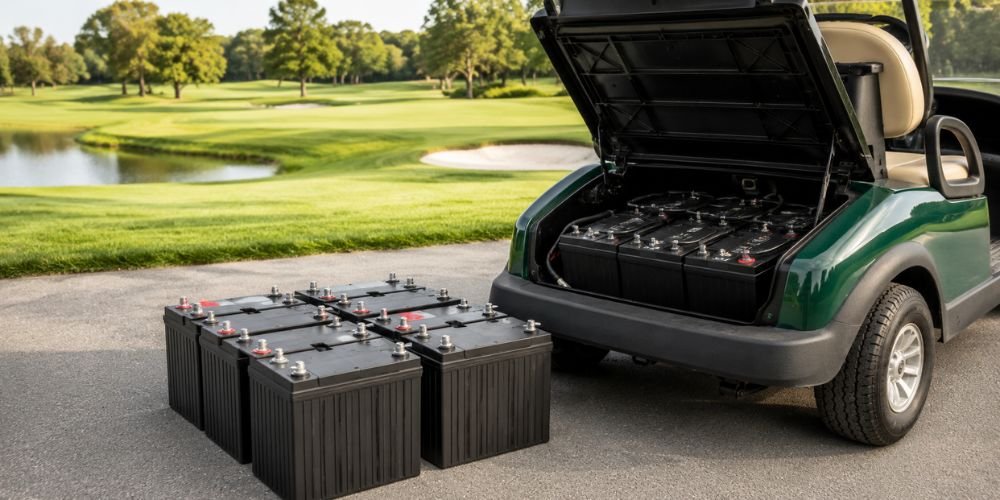
To charge golf cart batteries, connect the correct golf cart charger to the battery pack charging port and allow it to complete a full charging cycle. The charger must match the golf cart voltage system, such as 36V, 48V, or a lithium battery system.
Start With the Battery Type
A golf cart may use flooded lead acid, AGM or lithium batteries. They can all power a cart, but they do not like the same charging routine.
Flooded lead acid batteries need more attention. They may need water checks, clean terminals and a charger made for lead acid. AGM batteries are sealed, so there is no watering, but the charger still needs to suit AGM charging. Lithium batteries need a lithium compatible charger.
This is where owners get caught. The plug fits, so the charger feels right. That is not enough. A mismatched charger can shorten battery life or leave the pack undercharged.
Charge After Regular Use
Golf carts do better with steady charging habits. A battery pack should not sit drained after a long ride. That weak, parked, half forgotten state is hard on batteries.
For regular use, the owner should plug in after the ride, especially when the cart has worked hard. This keeps the pack from falling too low before the next trip.
Deep draining sounds harmless, but it adds wear. National Battery Supply explains this idea well in its guide on battery cycles. Each full discharge and recharge counts as wear.
Use the Right Charger
The charger should match the cart voltage and battery chemistry. A 36 volt cart needs the right 36 volt charger. A 48 volt cart needs the correct 48 volt charger. Lead acid, AGM and lithium packs also need the right charging profile.
An automatic smart charger is usually better than guessing. It reads the battery, charges in stages and stops when charging is complete. That helps prevent overcharging.
Check Water the Right Way
Flooded lead acid batteries need water checks. The timing matters.
The plates should stay covered before charging. After the battery is fully charged, distilled water can be added to the proper level if needed. Battery makers warn not to overfill because electrolyte rises during charging. Trojan also advises checking water monthly until the owner knows the battery’s normal pattern.
AGM and lithium batteries do not need watering. Removing caps from the wrong battery type can cause damage, so the label matters.
Keep Charging Area Safe
A golf cart should charge in a dry, open, ventilated place. Heat is the quiet enemy. So is dust, corrosion and loose wiring.
The owner should keep metal tools away from terminals, check that cables sit tight and look for corrosion before it spreads. A dirty terminal may not look serious, but it can slow charging.
Charging in a closed hot shed is not smart. Neither is charging near flames, sparks or stored fuel.
Watch the Signs
Slow charging, weak climbing power and shorter ride time all point to a battery or charging issue.
That does not always mean the whole pack is finished. It may be one weak battery, dirty terminals or the wrong charger. National Battery Supply covers these everyday warning signs in its guide on golf cart battery life.
Do Not Treat Lithium Like Lead Acid
Lithium golf cart batteries behave differently.
They usually do not need full discharge before charging. They do not need water. They need a charger that matches lithium charging. Many lithium packs also have a battery management system, but that does not mean any charger is safe.
The owner should follow the battery manual, especially for temperature rules and storage charging.
Conclusion
Good charging is mostly consistency.
Use the right charger. Plug in after normal use. Keep the area ventilated. Check flooded batteries for water. Keep terminals clean. Avoid heat. Do not let the cart sit dead.
That simple routine protects range, reduces early battery failure and makes the cart easier to trust.
For buyers replacing an old pack or building a better charging setup, Golf Cart Batteries from National Battery Supply gives a practical place to compare options by real cart use, not guesswork.
Featured Posts
Request more information
National Battery Supply delivers dependable energy storage solutions tailored to commercial, industrial, and government applications. Our catalog ranges from custom battery manufacturing and UPS systems, portable power stations, to high-capacity solutions like whole-home battery energy storage systems (BESS) and scalable containerized energy storage units- engineered for reliability, flexibility, and rapid deployment.
We support critical infrastructure, telecom, data centers, healthcare, and remote operations with power systems built for performance in demanding environments. Whether it’s deep cycle batteries, lithium forklift replacements, OEM portable power kits, solar backups, and large-scale energy storage systems. We provide tailored solutions with short lead times, custom branding, and bulk pricing.
Our team also specializes in helping integrators, resellers, and developers source complete battery systems for residential microgrids, off-grid power stations, and industrial container setups. Whether you need to back up a home, energize a remote site, or manage facility-wide loads, we have the scalable energy storage options to match.
Contact us today to learn how our advanced power systems can reduce downtime, extend operational capacity, and support your long-term energy goals.
National Battery Supply is a reputable manufacturer specializing in custom battery solutions. With over 20 years of experience, we can manage all your power needs.
Batteries
Compliance
Copyright 2026 © National Battery Supply | UEI: Z66VQCUPCGL3 CAGE: 9UK94