- UEI: Z66VQCUPCGL3 CAGE: 9UK94
- +1 844-539-2555
- Sales@NationalBatterySupply.com
Deep Discharge Explained: How It Affects Your Battery
A battery rarely fails all at once. It starts with a shorter run time. The charger seems to finish too quickly. Then the motor, inverter or backup system struggles under a load that used to be easy.
Deep discharge is often hiding inside that story. It happens when a battery is drained too far before it gets charged again. Some batteries are made for that use. Others are not. National Battery Supply helps buyers compare those differences through National Battery Supply, especially when the battery has to power equipment.
What Does Deep Discharge Mean?
Deep discharge means the battery has used most of its stored power. In plain terms, it has been run down hard.
One low battery does not always mean disaster. Repetition is the problem. A battery that keeps getting pulled down too deeply starts aging faster. Chemistry gets stressed. Capacity drops. The battery may still charge, yet it no longer holds energy the way it once did.
A shallow discharge uses a small slice of the battery. A deep discharge uses a much larger slice.
Why Does Discharge Depth Matter?
Every battery has a working life. That life is often measured in cycles, which means charge and discharge use over time. National Battery Supply explains this in its guide to battery cycle life.
A light daily drain is easier than a full drain every time.
Which Batteries Suffer Most?
Starting batteries are a common trap. They are built to deliver a strong burst of power for a few seconds. After that, the alternator takes over.
They are not built to run lights, pumps, trolling motors, appliances or off-grid gear for hours. Using one that way is like asking a sprinter to run a marathon while carrying tools.
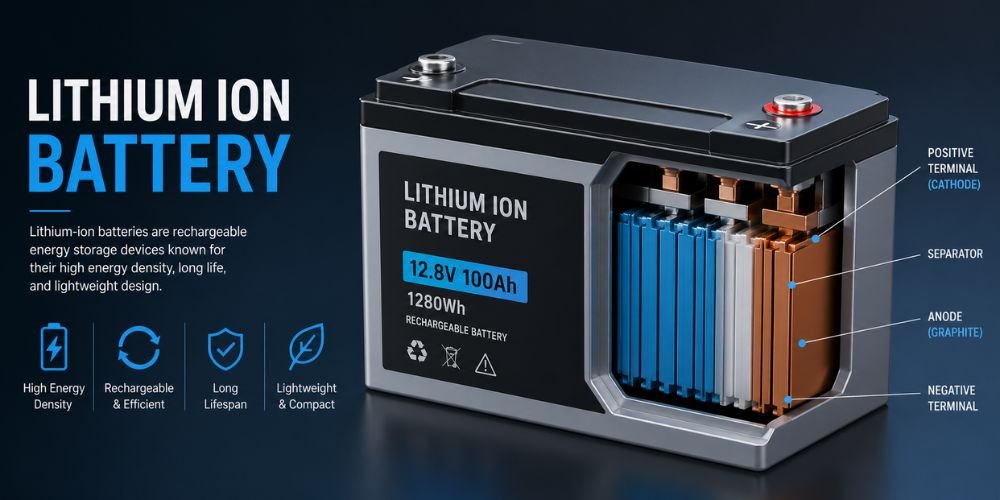
Deep cycle batteries are different. They are built for steady power over longer periods. AGM, gel and lithium options can all serve that purpose, though they do not perform the same.
What Causes Deep Discharge?
The cause is not always obvious. Many users blame the battery first. Sometimes the setup is the real problem.
Common causes include:
- Leaving accessories on overnight
- Running an inverter too long
- Using a starting battery for deep cycle work
- Choosing a battery that is too small
- Waiting too long before recharging
- Storing a battery at a low charge
- Ignoring voltage under load
A battery can look acceptable at rest then sag once equipment starts pulling power.
What Are The Warning Signs?
Deep discharge damage usually shows up before complete failure.
Shorter run time
The battery no longer powers equipment as long as it used to.
Voltage drop
Equipment cuts out, slows down or resets when demand rises.
Heat or swelling
Physical changes are serious and must not be ignored.
How Can Users Prevent It?
Good battery life starts with good habits. The costly mistake is treating every battery like it works the same.
Recharge soon after use. Avoid draining the battery to empty unless the chemistry and manufacturer guidance allow it. Use the right charger. Size the battery bank for the actual load. For larger systems, a battery management system can help protect cells. National Battery Supply covers that protection in its guide to LiFePO4 battery management systems.
Conclusion
LiFePO4 batteries are popular because they handle deeper cycling better than many lead acid options. They also hold voltage well, weigh less and deliver more usable power in demanding setups.
That does not make them careless-proof. Good charging, storage and sizing still matter. The advantage is breathing room when the job involves regular cycling.
For RVs, solar setups, marine use, backup systems and mobile power, LiFePO4 Batteries can be a stronger fit when deep discharge is part of real daily use.
National Battery Supply helps buyers look past the label and choose a battery based on load, runtime and long-term use. That is where better battery life begins and you will not regret the perks.
Featured Posts
Request more information
National Battery Supply delivers dependable energy storage solutions tailored to commercial, industrial, and government applications. Our catalog ranges from custom battery manufacturing and UPS systems, portable power stations, to high-capacity solutions like whole-home battery energy storage systems (BESS) and scalable containerized energy storage units- engineered for reliability, flexibility, and rapid deployment.
We support critical infrastructure, telecom, data centers, healthcare, and remote operations with power systems built for performance in demanding environments. Whether it’s deep cycle batteries, lithium forklift replacements, OEM portable power kits, solar backups, and large-scale energy storage systems. We provide tailored solutions with short lead times, custom branding, and bulk pricing.
Our team also specializes in helping integrators, resellers, and developers source complete battery systems for residential microgrids, off-grid power stations, and industrial container setups. Whether you need to back up a home, energize a remote site, or manage facility-wide loads, we have the scalable energy storage options to match.
Contact us today to learn how our advanced power systems can reduce downtime, extend operational capacity, and support your long-term energy goals.
National Battery Supply is a reputable manufacturer specializing in custom battery solutions. With over 20 years of experience, we can manage all your power needs.
Batteries
Compliance
Copyright 2026 © National Battery Supply | UEI: Z66VQCUPCGL3 CAGE: 9UK94