- UEI: Z66VQCUPCGL3 CAGE: 9UK94
- +1 844-539-2555
- Sales@NationalBatterySupply.com
Can LiPo Batteries Go on a Plane?
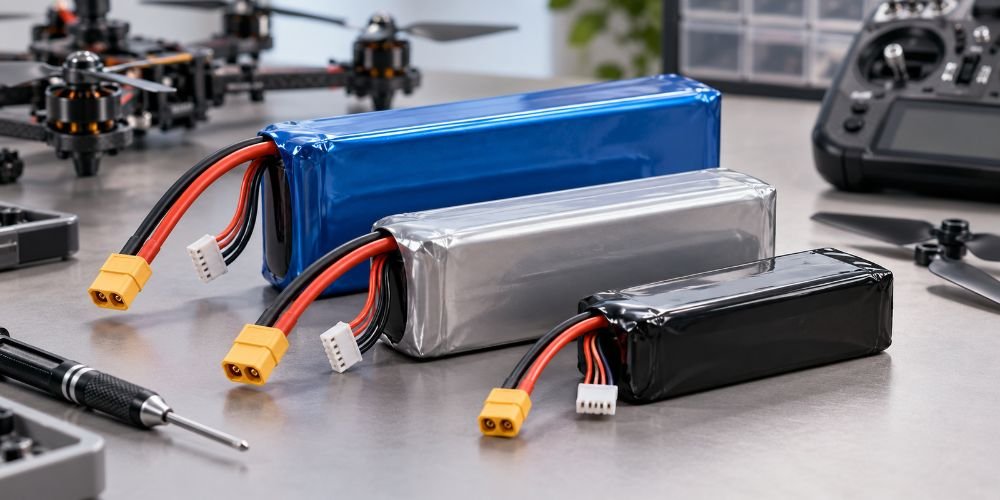
A drone battery could seem innocent in a camera backpack. The trouble comes when the luggage hits the check-in desk and an airline worker asks how many watt-hours the pack contains. Sometimes the number isn’t written where you’d expect it to be.
The query are li polymer batteries permitted on aircraft is a rather simple response for those checking battery specs via National Battery Supply. Loose batteries should be in cabin baggage but most compact packs may fly. The remainder depends on capacity and airline restrictions.
Lithium-Ion Flight Rules for LiPo Batteries
It’s a lithium polymer battery, a member of the rechargeable lithium-ion family. Just because it’s named LiPo, the flat pouch used in certain drones or RC models doesn’t earn a special exemption. The aviation restrictions are about stored energy and how the battery is packed.
The fear is of overheating. If one cell is injured it may go into thermal runaway and produce heat that affects other cells . A problem with a battery stowed away in the airplane hold is less likely to be noticed than one in the cabin by cabin crew.
The site’s Li-Ion versus Li-Polymer Batteries page offers a very good description of cell structures. For airport reasons the pack’s printed rating is a lot more important than the form.
Watt-Hours Is The Number You Are Looking For
A traveler could read 5000mAh in big font and think that solves everything. Nope. Airlines employ watt-hours (Wh), which factor in voltage as well as capacity.
The wide restrictions under US FAA passenger regulations are:
- Up to 100 Wh: Usually approved for personal use without airline consent in advance.
- More than 100 Wh, up to 160 Wh: Requires clearance by the airline. Maximum of two bigger backup batteries per person.
- More than 160 Wh: Not permitted as usual passenger luggage. Special provisions exist for several mobility aids.
- If Wh isn’t specified, multiply nominal voltage by amp-hours to get it. A 14.8V pack labeled 5,000mAh is 5Ah and hence it is rated at 74Wh. The same voltage produces 148Wh at 10,000mAh. 2nd pack requires airline permission.
A tired label is worth getting sorted out before you go. A calculation may aid the owner, but an airline may still refuse a battery if its rating cannot be validated. The original box may have the missing specification. It seems sensible to photograph it before leaving home, however the airline still needs to accept the proof. An unmarked pack might hold you up at security.
Spare Packs out of Checked Bags
A camera with a battery in it is not the same as two batteries in a sock next to it. According to FAA regulations, installed batteries may usually be transported in checked electronic equipment if the devices are completely powered down and shielded from damage or inadvertent activation. Carry-on preferred.
Loose or detached LiPo batteries must be carried in carry-on luggage, however. Power banks go in there, too. If they take a bag at the gate because the overhead bins are full, after it leaves the cabin it is considered checked. First, the spare packs.
That final aspect catches those who packed right at home. The transition is easy with a compact battery case in an accessible pocket.
Space Worth Having a Battery Case
The connection on an RC pack is something that is very simple to miss. If its contacts are exposed and are touching keys or other metal objects, a short circuit is conceivable. Each backup battery requires its own protection, either kept in its retail packaging or protected with insulated connections and a unique bag or case.
Don’t squash a soft LiPo bag into the bottom of a hefty rig. Nor should you flatten a bulging pack to make it fit. If you see swelling, punctures, frayed wires or excessive heat, leave the battery. Arrange for safe handling.
The site’s page on Li polymer battery care touches on examination and storage practices. These tests are essential before packing as well as after failure.
Power Banks Come With Their Own Complications
Some airlines may handle a drone battery differently from a phone power bank, although both may include lithium-ion cells. IATA’s 2026 passenger advice will advise greater restrictions on power banks, restricting passengers to two power banks with a maximum rating of 100Wh. It also warns they should not be charged from the aircraft’s electrical supply.
Some airlines may limit where power banks may be kept or whether they can be used during the journey. The FAA’s permission of certain bigger extra batteries doesn’t mean every power bank will be approved for an overseas trip.
Custom equipment is a different problem. A pack made for a specific gadget can have weird wiring or an ambiguous name. The specs shown for Custom Battery Packs indicate why you need to verify the particular pack rating. A product description is not a license to get on with it.
Ask the Airline Before You Fly Day
It may be a painless operation for a short drive home with just one little camera battery. A few drone packs on a connecting foreign aircraft should be an email to the airline ahead of time. The carrier may inquire about the Wh rating, number and if each pack is fitted.
Carrying batteries for sales is a different thing, typical passenger allowances are for personal use. Same with huge portable power stations that are beyond the passenger limit.
No one wants to find an issue with the check-in line growing behind him. Easier to read the current airline rules than to unpack a crowded suitcase at the counter.
Conclusion
Small, undamaged LiPo spares generally travel in cabin baggage with protected terminals. Larger packs may need advance approval, while those above 160Wh are normally excluded from passenger baggage. Specifications for Li Polymer Batteries can help identify a pack, but the airline has the final say. Checking before departure beats having to leave a battery behind.
Featured Posts
Request more information
National Battery Supply delivers dependable energy storage solutions tailored to commercial, industrial, and government applications. Our catalog ranges from custom battery manufacturing and UPS systems, portable power stations, to high-capacity solutions like whole-home battery energy storage systems (BESS) and scalable containerized energy storage units- engineered for reliability, flexibility, and rapid deployment.
We support critical infrastructure, telecom, data centers, healthcare, and remote operations with power systems built for performance in demanding environments. Whether it’s deep cycle batteries, lithium forklift replacements, OEM portable power kits, solar backups, and large-scale energy storage systems. We provide tailored solutions with short lead times, custom branding, and bulk pricing.
Our team also specializes in helping integrators, resellers, and developers source complete battery systems for residential microgrids, off-grid power stations, and industrial container setups. Whether you need to back up a home, energize a remote site, or manage facility-wide loads, we have the scalable energy storage options to match.
Contact us today to learn how our advanced power systems can reduce downtime, extend operational capacity, and support your long-term energy goals.
National Battery Supply is a reputable manufacturer specializing in custom battery solutions. With over 20 years of experience, we can manage all your power needs.
Batteries
Copyright 2026 © National Battery Supply | UEI: Z66VQCUPCGL3 CAGE: 9UK94