- UEI: Z66VQCUPCGL3 CAGE: 9UK94
- +1 844-539-2555
- Sales@NationalBatterySupply.com
How Much Are Small Solar Panels?
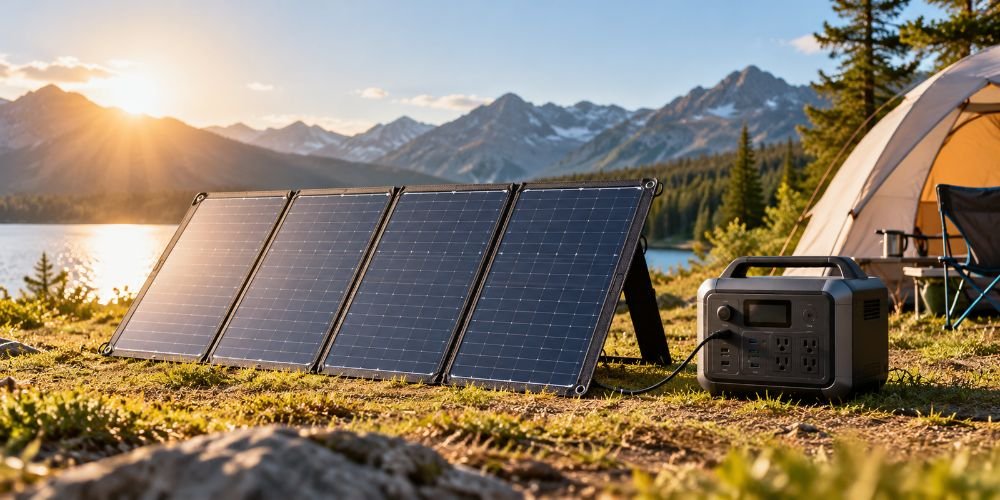
A $55 solar panel shot may make it just about precisely like a $150 one. They both said they will utilize solar power. One of them may be rolled up and stored in a car trunk. That disparity disappears when individuals judge pricing by size. What do little solar panels look like in real life?
Even two 100w versions have varied costs at National Battery Supply. The useful question is what’s in the package and what occurs once the panel is hooked in.
Small Panels, Very Different Price Tags
A simple 50W rigid panel costs around $56 in the US. A flexible 50W version may be about $78. Renogy also has a 30W folding panel that is pocket small for around $74. Those are examples off current listings, not pricing all stores will match.
If you want something bigger, National Battery Supply has 100W folding panels for $149 and $159. It’s 200W foldables go for $249 and $349. That more money buys more than a bigger number on a label. Weight, fold and surface materials are also variable.
The pricing are for panels. The full set-up might go a lot longer. Shipping may help, too, with a framed panel. Prices fluctuate rapidly with discounts, therefore the price per watt is only meaningful if the comparing goods have similar accessories.
A Watt Rating Is Not A Promise For Every Day
100W label means output under regular test circumstances. That doesn’t imply 100 watts will go into a battery all afternoon. A cloud passes by, a tree shadows a corner or the panel warms. Output modifications.
A 100W panel may yield anything like 300 to 400 watt hours after usual losses with four peak sun hours. This is a good day estimate, not a number you organize your morning around. A boring winter day can produce even less.
Panel angle is important also. It’s easy to lean one against a cooler, but that’s never the optimal exposure as the sun crosses the sky.
That difference is important for camping fridges. An on-again, off-again fridge all nite might use more energy than a modest panel will save the next day. The battery must carry the load at night. The panel is only helping to top up.
The Best Is Not Always the Cheapest Shape
Rigid panels are usually good value if they can be left installed on a shed or trailer. However their aluminum frames do take up room in a vehicle. A panel that needs to be carted through a busy campground suddenly becomes less convenient.
A flexible panel will alleviate a lot of mounting difficulties, but don’t bend it beyond the manufacturer’s suggested limitations. Poor ventilation behind some installations might also be a problem with heat.
Folding panels are designed for packing away. The handles, stands and the protective fabric explain the greater cost. The trade-off is additional folding joints and connectors to take care of. How portable panels manage rain advice is relevant here. A weatherproof face does not imply all plugs may be left in puddles.
The Missing Accessories Add Up
An inexpensive panel may just have two wires and little else. That may be OK if you already have compatible equipment. It might imply another journey to go shopping for an initial setup.
Typically, a loose 12V battery will need a proper solar charge controller. It stops the panel from charging the battery improperly. The electronics may be integrated into a portable power station, but the panel’s voltage, current and connection must still match its solar input.
This is why the specs of portable power stations count as much as the price of the panel. An inexpensive 200W panel is of little use if the receiving station can only handle a considerably lower solar input.
Cable extensions, adapters and mounting brackets might add to the price again. The box’s contents are worth reading closely. A snapshot of the connector might save you from buying the wrong adaptor, especially if the power station and panel are from different manufacturers.
Big Panels Aren’t Needed For Little Jobs
A 30W panel might be useful for small gadgets and a suitable charging system. A 50W panel could assist keep a tiny battery topped-up or run low-power gadgets. Both are not going to run a home kettle direct.
Good sun makes it more feasible to recharge a camping battery or a small power station at 100W. 200W panel can provide greater output but needs more clear ground when unfolded. That sunny spot, in a campground, may already be filled by the picnic table.
The daily energy utilization of the equipment is important before you decide on wattage. A light running for five hours uses a different amount of energy than a fridge running through the weekend. Watts describe instantaneous power. Watt hours are energy over a period of time.
What Happens After One Year Of Use?
A fixed panel can sit undisturbed for months. Folding panels are pulled over grass, stuffed inside boots and occasionally kept moist. Sometimes it’s worth looking at cables & seams.
Less dramatic, but just as recognizable, is dirt. Light might be blocked by dust or bird droppings. Instructions for cleaning portable solar panels include gentle washing and drying before storing . Saving money is not scrubbing with a harsh camping cloth that scrapes the surface.
Conclusion
A small panel might cost under $60 or several hundred dollars. The right price depends on where it will sit, how much energy is needed and what charging equipment is already available. Comparing portable solar panels by included parts and real use makes more sense than choosing the lowest sticker price.
Featured Posts
Request more information
National Battery Supply delivers dependable energy storage solutions tailored to commercial, industrial, and government applications. Our catalog ranges from custom battery manufacturing and UPS systems, portable power stations, to high-capacity solutions like whole-home battery energy storage systems (BESS) and scalable containerized energy storage units- engineered for reliability, flexibility, and rapid deployment.
We support critical infrastructure, telecom, data centers, healthcare, and remote operations with power systems built for performance in demanding environments. Whether it’s deep cycle batteries, lithium forklift replacements, OEM portable power kits, solar backups, and large-scale energy storage systems. We provide tailored solutions with short lead times, custom branding, and bulk pricing.
Our team also specializes in helping integrators, resellers, and developers source complete battery systems for residential microgrids, off-grid power stations, and industrial container setups. Whether you need to back up a home, energize a remote site, or manage facility-wide loads, we have the scalable energy storage options to match.
Contact us today to learn how our advanced power systems can reduce downtime, extend operational capacity, and support your long-term energy goals.
National Battery Supply is a reputable manufacturer specializing in custom battery solutions. With over 20 years of experience, we can manage all your power needs.
Batteries
Compliance
Copyright 2026 © National Battery Supply | UEI: Z66VQCUPCGL3 CAGE: 9UK94