- UEI: Z66VQCUPCGL3 CAGE: 9UK94
- +1 844-539-2555
- Sales@NationalBatterySupply.com
How to Clean Portable Solar Panels?
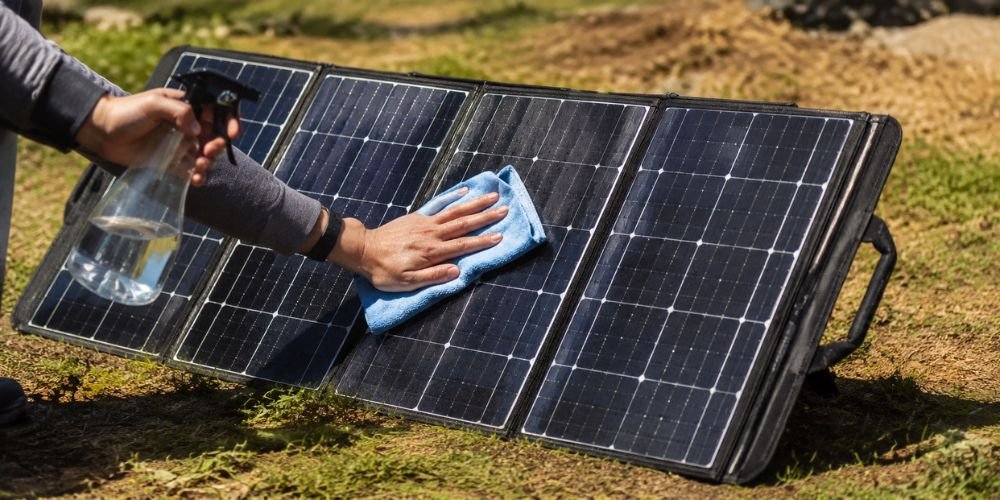
To clean portable solar panels, turn off and disconnect the panel, remove loose dust with a soft brush, wipe the surface with clean water and a microfiber cloth, and allow the panel to dry completely before reconnecting it. Cleaning removes dirt, dust, bird droppings, and other debris that can reduce sunlight absorption and lower power output.
Even if it has the waterproofing guide explains why outdoor use does not mean every part should be soaked.
Why Does Dirt Affect Solar Charging?
Dirt affects solar charging because it blocks sunlight from reaching the solar cells, reducing the amount of electricity the panel can produce. Solar panels work by converting sunlight into electrical energy, so when dust, mud, bird droppings, or other particles cover the surface, fewer sunlight particles reach the cells and the power output decreases. This effect is called soiling loss.
What Should Be Checked First?
The panel should be disconnected from the battery, power station or charge controller. If it has been sitting in direct sun, it also needs time to cool.
Before water or a cloth touches the surface, check for:
- Cracks, bubbles or lifting
- Loose stitching
- Open ports or wet plugs
- Small stones trapped beneath the panel
- Sand resting across the face
Visible damage changes the job. A cracked surface or loose connector needs inspection rather than another wash.
Which Cleaning Supplies Are Safe?
The majority of portable panels need relatively little. The majority of portable panels need relatively little.
Plain water should get the first try. Mild soap can be used when sticky dirt remains and the manufacturer allows it. Strong glass cleaners, bleach and household sprays can leave residue or affect the protective layer.
A campsite rag may look clean. That grit can still leave small scratches.
How Should the Panel Be Washed?
Solar panels should be washed by first removing loose dust, then rinsing the surface with clean water, and finally removing stuck dirt with a soft brush or microfiber cloth. The cleaning process should avoid scratching the glass or forcing water into the panel edges.
What Cleaning Mistakes Cause Damage?
Portable panels are built for travel, but the working surface is not designed for rough treatment.
Avoid:
- Pressure washers or strong hose jets
- Scouring pads, stiff brushes or metal scrapers
- Bleach, solvents or glass cleaner
- Standing or kneeling on the panel
- Folding the panel while moisture remains
- Spraying water into ports or cable ends
A pressure washer can force water into places a soft rinse would never reach. A stiff brush can leave scratches that collect more dirt later. Wax and polish may leave a film over the cells.
How Often Should a Panel Be Cleaned?
A solar panel should usually be cleaned every 6 to 12 months, but the correct cleaning frequency depends on the environment around the panels. Panels installed in dusty areas, near roads, farms, construction sites, or places with many birds may need cleaning every 3 to 6 months because dirt builds up faster.
How Should Panels Be Stored?
Moisture trapped inside a folded panel can leave marks, create odor and reach areas that are awkward to dry later.
Once the panel is dry, the cable should be coiled loosely and connector caps replaced. It can then return to its case or a clean storage space where heavy equipment cannot press against it.
The case deserves a quick look as well. Dust left inside goes straight back onto the panel.
Conclusion
Cleaning should stop when the problem looks electrical or structural. Cracks, swollen areas, exposed wiring, melted plastic or a burned smell need proper attention.
The same applies when output remains low after the panel is clean, fully open and aimed toward direct sunlight. The issue may sit in the cable, connector, controller or receiving battery.
National Battery Supply carries Portable Solar Panels for camping, backup power and off-grid use. Keeping one ready is simple. Loose grit should come off before wiping. Water should stay away from ports. Every layer should dry before storage.
A careful five-minute clean is far better than rough scrubbing after dirt has baked onto the surface.
Featured Posts
Request more information
National Battery Supply delivers dependable energy storage solutions tailored to commercial, industrial, and government applications. Our catalog ranges from custom battery manufacturing and UPS systems, portable power stations, to high-capacity solutions like whole-home battery energy storage systems (BESS) and scalable containerized energy storage units- engineered for reliability, flexibility, and rapid deployment.
We support critical infrastructure, telecom, data centers, healthcare, and remote operations with power systems built for performance in demanding environments. Whether it’s deep cycle batteries, lithium forklift replacements, OEM portable power kits, solar backups, and large-scale energy storage systems. We provide tailored solutions with short lead times, custom branding, and bulk pricing.
Our team also specializes in helping integrators, resellers, and developers source complete battery systems for residential microgrids, off-grid power stations, and industrial container setups. Whether you need to back up a home, energize a remote site, or manage facility-wide loads, we have the scalable energy storage options to match.
Contact us today to learn how our advanced power systems can reduce downtime, extend operational capacity, and support your long-term energy goals.
National Battery Supply is a reputable manufacturer specializing in custom battery solutions. With over 20 years of experience, we can manage all your power needs.
Batteries
Copyright 2026 © National Battery Supply | UEI: Z66VQCUPCGL3 CAGE: 9UK94