- UEI: Z66VQCUPCGL3 CAGE: 9UK94
- +1 844-539-2555
- Sales@NationalBatterySupply.com

How to Take Care of a Li Polymer Battery?
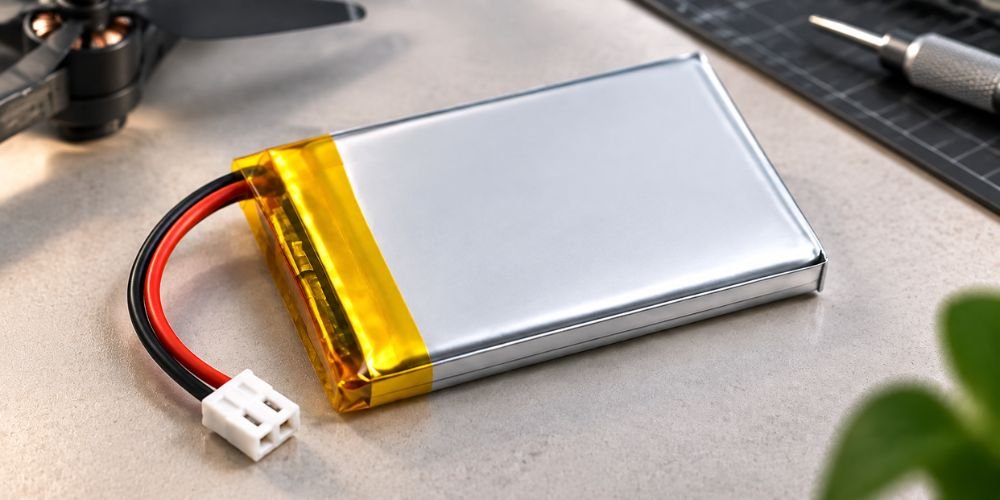
A Li-Polymer (LiPo) battery should be maintained by keeping each cell voltage between 3.7V and 4.2V, charging it with a LiPo balance charger, and avoiding discharge below 3.0V per cell. For daily use, stop using the battery when it reaches around 3.3V to 3.5V per cell. Store the battery at 3.8V per cell (about 40% to 60% charge), keep it in a dry place at 15°C to 25°C, and avoid charging or using it when the battery is hot, swollen, or physically damaged. These practices help reduce capacity loss and extend the battery’s service life.
Understanding basic Li polymer battery maintenance helps prevent complications for anybody employing portable devices, hobby equipment or other battery-powered items. National Battery Supply suggests batteries for varied power demands.
What Shortens A Li Polymer Battery Lifespan?
A Li-Polymer (LiPo) battery loses lifespan when its cells are repeatedly pushed outside their safe operating limits. Charging a LiPo cell above 4.2V, allowing it to drop below 3.0V per cell, or exposing it to temperatures above 45°C speeds up chemical damage inside the battery. Storing the battery at 100% charge for weeks or months also increases cell stress. These conditions reduce the battery’s capacity, increase voltage drop under load, and can cause the pouch cells to swell over time.
Battery Maintenance Affects How Quickly That Happens
Drone batteries, for example. When you buy two batteries, they may age differently. It may be charged, stored indoors and checked often. Another may be left empty and stored in a hot garage after a flight. Change may appear after a few months.
Battery condition may be affected by:
- Frequent complete discharge.
- Excessive heat exposure.
- Incorrect charging equipment.
- Long periods without use.
- Physical damage from drops or pressure.
Small changes in handling can make a difference over the battery’s usable life.
How To Charge Li Polymer Battery?
A Li-Polymer (LiPo) battery should be charged using a dedicated LiPo balance charger set to the correct cell count and charging current. Set the charger according to the battery voltage, and never allow the battery to exceed 4.2V per cell during charging.
Follow these steps:
Check the battery specifications
Confirm the battery’s cell count (S rating), capacity (mAh), and recommended charging rate.
Example:
1S LiPo: 3.7V nominal, 4.2V fully charged
2S LiPo: 7.4V nominal, 8.4V fully charged
3S LiPo: 11.1V nominal, 12.6V fully charged
Connect the Battery to a LiPo Balance Charger
Connect the main power connector and balance plug.
The balance connector allows the charger to monitor each cell separately and keep all cells at the same voltage.
Set The Correct Charging Current
A common safe charging rate for LiPo batteries is 1C unless the manufacturer specifies a different value.
Formula: Charging current (A) = Battery capacity (Ah) × C rating
Charge in a Safe Location
- Place the battery on a non-flammable surface while charging.
- Do not charge a swollen, damaged, or overheated battery.
- Avoid leaving the battery unattended during charging.
- Stop charging at the correct voltage
- The charger should automatically stop when each cell reaches 4.2V.
- Do not continue charging after the battery reaches full voltage, as overcharging can damage the cells.
How Do You Store A Li Polymer Battery?
One of the simplest things to miss is storage. Battery problems are often noticed after a device has been sitting unused for a long time.
Li polymer battery should not be subjected to situations that might harm the cells. A drawer, equipment box or storage container may appear innocuous enough but position is everything.
Before you store a battery:
- Store in a cool dry place.
- Keep out of direct sunlight.
- Keep it free from dampness.
- Inspect for damage before storage.
A common example is a battery for seasonal equipment. Someone could use a gadget in summer and then stick it away and expect it to perform flawlessly months later. A short battery check before storage and before reuse can avoid surprises.
Can Heat Destroy A Li Polymer Battery?
Yes, heat can permanently damage a Li-Polymer battery. When a LiPo battery temperature rises above 45°C, the electrolyte and internal cell materials start to degrade faster, causing capacity loss, higher internal resistance, and reduced charging performance. Continuous exposure to temperatures above 60°C can damage the cells and increase the risk of swelling.
A battery can have problems when:
- Left in a parked car.
- Stored near heating equipment.
- In an area of inadequate airflow.
- Used a lot without cooling pauses
Cold conditions might also decrease the battery output. A gadget may look weaker in cold weather because the battery cannot give the same performance until it warms up.
Keeping the battery within an appropriate temperature range facilitates more steady functioning.
Indicators Of A Damaged Li Polymer Battery
A Li polymer battery should be examined often, especially if it is used extensively.
Some warning indicators are simple to notice:
- The battery starts expanding.
- Outer cover is damaged.
- The battery becomes extremely heated.
- The gadget loses power considerably faster.
- Charging conduct changes rapidly.
A bloated battery should not continue to be used. It might signal internal damage that requires replacement.
Ignoring early indications typically leads to worse troubles later.
Faults With Li Polymer Batteries To Avoid
Many battery issues are caused by simple practices that appear innocent at the time.
Typical instances are:
- Leaving a battery fully empty for weeks.
- Using an incorrect charger.
- Storing in severe temperatures.
- Charging a damaged battery.
- Continuing to use a battery once oedema occurs.
A battery does not require extensive maintenance. It mainly needs the correct charger, suitable storage and simple tests before usage.
When Should Li Polymer Batteries Be Replaced?
No Li polymer battery lasts forever. Eventually the cells will not be able to retain as much energy.
You may need to change a battery if:
- It doesn’t power up to the normal length of time.
- Charges but loses power soon.
- Shows physical damage.
- Performs inconsistently.
Choosing the suitable replacement is also vital. Batteries vary in voltage, capacity and size, so you should always confirm they are compatible.
Conclusion
Good battery maintenance typically comes from avoiding a few basic errors. A battery that is well protected, charged with the proper equipment and inspected before being stored for extended periods is more likely to work dependably.
On the other hand, if you need any equipment, be sure to go to our store. National Battery Supply has Li Polymer batteries for applications that need small, reliable power.
You can’t stop a battery from deteriorating naturally, but you can reduce unnecessary wear by using it carefully. Minor modifications can be a good way to see if there are problems before they get so bad that they can’t be undone on the device.
Featured Posts
Request more information
National Battery Supply delivers dependable energy storage solutions tailored to commercial, industrial, and government applications. Our catalog ranges from custom battery manufacturing and UPS systems, portable power stations, to high-capacity solutions like whole-home battery energy storage systems (BESS) and scalable containerized energy storage units- engineered for reliability, flexibility, and rapid deployment.
We support critical infrastructure, telecom, data centers, healthcare, and remote operations with power systems built for performance in demanding environments. Whether it’s deep cycle batteries, lithium forklift replacements, OEM portable power kits, solar backups, and large-scale energy storage systems. We provide tailored solutions with short lead times, custom branding, and bulk pricing.
Our team also specializes in helping integrators, resellers, and developers source complete battery systems for residential microgrids, off-grid power stations, and industrial container setups. Whether you need to back up a home, energize a remote site, or manage facility-wide loads, we have the scalable energy storage options to match.
Contact us today to learn how our advanced power systems can reduce downtime, extend operational capacity, and support your long-term energy goals.

National Battery Supply is a reputable manufacturer specializing in custom battery solutions. With over 20 years of experience, we can manage all your power needs.
Batteries
Compliance
Copyright 2026 © National Battery Supply | UEI: Z66VQCUPCGL3 CAGE: 9UK94