- UEI: Z66VQCUPCGL3 CAGE: 9UK94
- +1 844-539-2555
- Sales@NationalBatterySupply.com
Are Rechargeable Batteries Worth It?
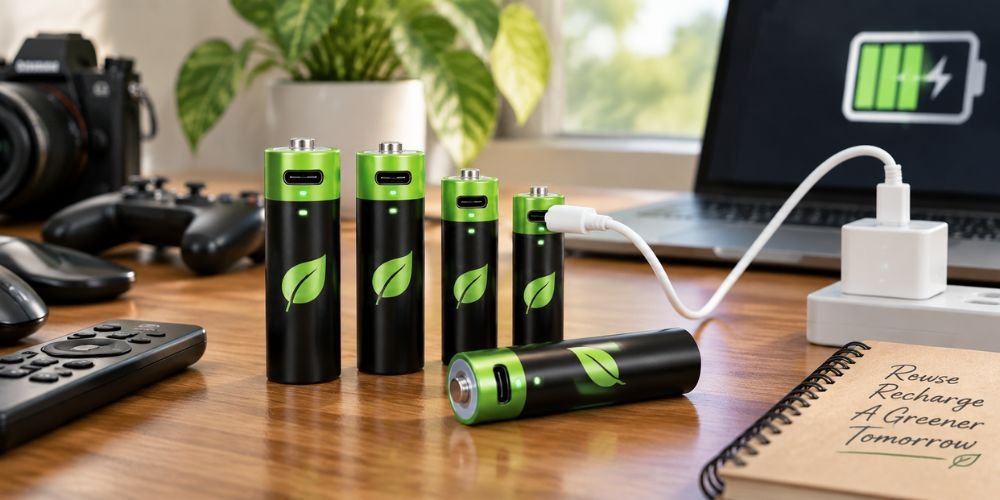
Yes. Rechargeable batteries are worth it when the same device uses batteries regularly.
A typical AA NiMH rechargeable battery is rated around 1.2V and 1,900 to 2,500 mAh and can usually handle hundreds of charge cycles. A standard alkaline AA is about 1.5V, but it is normally used once and then replaced.
The cost difference becomes clear with repeated use. If four rechargeable AA batteries cost $12 total and each is used 300 times, that is about $0.01 per battery use, before the small charging cost. Four disposable batteries bought 300 times would require 1,200 batteries.
Why People Still Hesitate
Rechargeable batteries still carry baggage from older versions. Many people remember the Rechargeable batteries still have baggage from the older iterations. The sort that ran out in the drawer, took forever to charge or seemed dead after a brief run is remembered by many. That memory has lasted longer than some of those things deserved.
The new rechargeables are better than the old ones people complain about. Low self-discharge NiMH batteries hold a charge considerably better. USB charging has made things easy for folks who never wanted another charger sitting on the counter. But a superior product isn’t a perfect match everywhere.
Where They Usually Make Sense
Rechargeables tend to do well in things that are always chewing through power. That is where the cost starts making sense.
Common examples include:
- game controllers
- wireless keyboards and mice
- children’s toys
- camera flashes
- flashlights used often
A house that changes AA batteries every couple of weeks will notice the difference far sooner than one that changes them twice a year. The up front cost is larger, especially after you factor in a charger, but the repeated use makes the comparison different.
Running out feels less annoying when a charged set is already in a drawer. That is one reason repeat-use battery products keep their appeal. The same logic shows up in larger applications too. Products such as Deep Cycle Batteries work on the broader idea that rechargeability matters most when the demand is regular.
Where They Often Fall Short
Some devices just do not need much from a battery. A wall clock may run for a long time on a disposable cell. The same goes for a remote used lightly or an emergency item that sits untouched for months. In those cases, a rechargeable battery can feel like extra effort without much return.
Voltage also matters more than many buyers expect. A standard alkaline AA usually starts at 1.5 volts. Many rechargeable AAs deliver 1.2 volts. Plenty of devices handle that with no problem. Some are picky. They may show a low-battery warning early or act as if the battery is weaker than it really is.
That is why opinions on rechargeables can sound all over the place. One household may swear by them for a camera. Another may give up after trying them in a soap dispenser. Neither story is strange.
The Part People Miss
Battery performance is not only about the battery. Charger quality matters. Storage matters. Heat matters more than people think. A decent set of rechargeables can start seeming unreliable if the cells are mixed unevenly, left flat too long or charged with poor equipment.
Basic care makes a bigger difference than most product pages admit. A guide like How to Take Care of a Li Polymer Battery explains why charging habits and storage conditions matter once lithium-based batteries are involved.
For buyers who are still sorting out sizes and formats, What Is a Type C Battery? is a useful reminder that battery shopping gets confusing fast when the device requirements are not clear.
There is also the waste question. Rechargeables can reduce the pile of used batteries over time, which is part of their appeal. That benefit shows up properly only when the batteries are used often enough.
A Practical Buying View
The most sensible way to judge rechargeables is to look at habits. If a device is used every day or close to it, rechargeables have a stronger case. If the battery stays in one item for a year, the advantage shrinks.
Routine counts too. Some people do well with a charging routine and keep a spare set ready. Others forget, which turns a rechargeable battery into one more thing sitting idle in a drawer. That does not make the battery bad. It just means the fit is wrong.
A buyer also has to look at the device manual instead of guessing. Some products are flexible. Some are not. Smoke alarms, medical devices and other critical equipment often need closer attention to manufacturer guidance than a toy or a computer mouse would.
Conclusion
Rechargeable batteries can be a smart buy, but mostly in devices that use enough power often enough to make repeated charging worthwhile. They are less convincing in low-drain items, rarely used products or equipment that does not respond well to lower-voltage rechargeables.
The real answer comes from the pattern of use, the device requirements and the willingness to keep batteries charged when needed. For households that want a simpler reusable option, Rechargeable USB Batteries offer one practical way to cut down on constant replacements.
Featured Posts
Request more information
National Battery Supply delivers dependable energy storage solutions tailored to commercial, industrial, and government applications. Our catalog ranges from custom battery manufacturing and UPS systems, portable power stations, to high-capacity solutions like whole-home battery energy storage systems (BESS) and scalable containerized energy storage units- engineered for reliability, flexibility, and rapid deployment.
We support critical infrastructure, telecom, data centers, healthcare, and remote operations with power systems built for performance in demanding environments. Whether it’s deep cycle batteries, lithium forklift replacements, OEM portable power kits, solar backups, and large-scale energy storage systems. We provide tailored solutions with short lead times, custom branding, and bulk pricing.
Our team also specializes in helping integrators, resellers, and developers source complete battery systems for residential microgrids, off-grid power stations, and industrial container setups. Whether you need to back up a home, energize a remote site, or manage facility-wide loads, we have the scalable energy storage options to match.
Contact us today to learn how our advanced power systems can reduce downtime, extend operational capacity, and support your long-term energy goals.

National Battery Supply is a reputable manufacturer specializing in custom battery solutions. With over 20 years of experience, we can manage all your power needs.
Batteries
Compliance
Copyright 2026 © National Battery Supply | UEI: Z66VQCUPCGL3 CAGE: 9UK94