- UEI: ZZVQCUPCGL3 CAGE: 9UK94
- +1 844-539-2555
- Sales@NationalBatterySupply.com

How Much Does a Marine Battery Weigh?
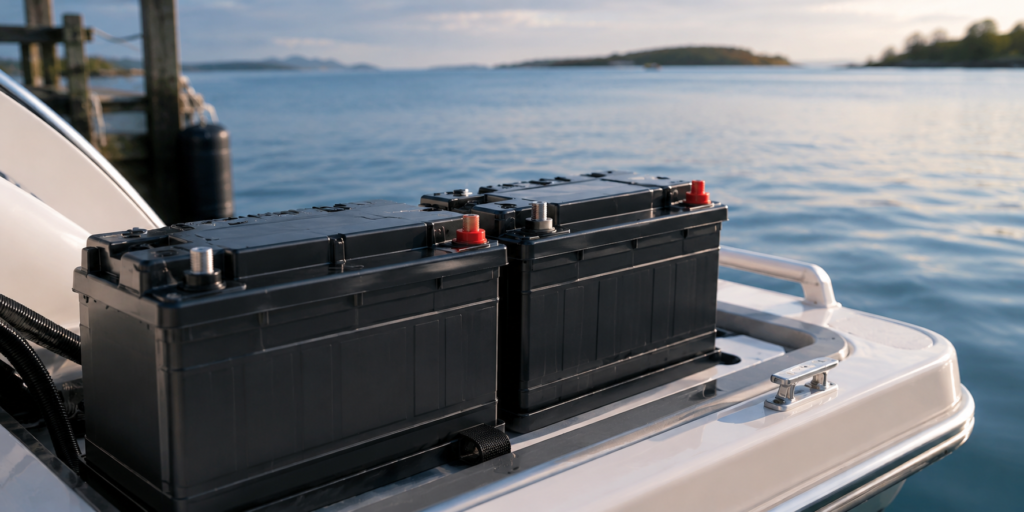
A marine battery feels manageable until it has to come out of a cramped boat compartment. That is usually when the weight becomes real. Not on the product page. Not in the specs. Right there, with one hand trying to get a grip and the other moving cables out of the way.
For buyers comparing options through National Battery Supply, weight matters more than it first seems. It affects lifting, storage, boat balance and future maintenance. A battery can match the voltage perfectly but still be the wrong choice if it is too heavy for the space or difficult to handle.
What Is the Normal Battery Weight?
Most marine batteries weigh around 25 to 85 pounds. Smaller starting batteries are usually easier to carry. Larger deep cycle batteries weigh more because they are built to deliver power for longer use.
That is the simple version.
A starting battery only needs to crank the engine. A deep cycle battery may run a trolling motor, lights, pumps, fish finder or other boat accessories for hours. More stored power usually means more weight, especially with lead acid batteries.
Lithium changes that a bit. It can give strong usable power with less weight, but it still has to match the charger, motor and setup.
Why Are Some Batteries Heavier?
The weight mostly comes from what sits inside the case. Flooded lead acid batteries use heavy lead plates and liquid electrolyte. AGM batteries are sealed and cleaner to handle, but they still carry lead inside. Lithium marine batteries are usually much lighter because they store power differently.
Group size matters too. A Group 24 battery is often easier to manage than a Group 31. Bigger cases can mean more capacity, but they also take up more room and add more load.
Does Battery Weight Change the Boat?
It can, especially on smaller boats. One heavy battery may not sound like a big issue, but where it sits matters. A battery placed near the stern can make the back of the boat sit lower. One placed off-center can make a lighter boat feel uneven.
Then there is the daily use side. If the battery has to come out for charging, cleaning, winter storage or replacement, weight becomes part of the routine. A 70 pound battery tucked under a seat is not fun to move twice a year.
When Should Weight Matter Most?
Some setups feel battery weight more than others. The lighter the boat or the tighter the storage area, the more careful the choice should be.
Weight matters most with:
- Trolling motor batteries
- Small fishing boats
- Electric kayak setups
- Pontoon accessory systems
- Cabin power batteries
- Seasonal battery removal
A lighter battery can make the setup easier to live with. Less strain. Better access. More room around cables and trays.
Is a Lighter Battery Always Better?
Not always. A lighter battery only helps if it still does the job. If the battery is too small for the motor or accessories, the boat owner may lose runtime or put too much demand on the battery.
Lithium can be a good choice when weight is a real problem. It is easier to lift and often gives more usable power than many lead acid options. Still, it may need the right charger and proper setup.
Weight should guide the decision, not make the whole decision.
What Should Buyers Check First?
Before choosing a marine battery, the owner should start with the boat itself. What needs power? How long should it run? Where will the battery sit? How often will it be moved?
A few details are worth checking before purchase:
- Battery group size
- Amp hour rating
- Reserve capacity
- Cranking power
- Charger compatibility
- Tray size
- Cable reach
- Lifting access
The last one gets ignored often. A battery can technically fit and still be a headache every time it needs to come out.
Conclusion
Marine battery weight comes down to type, size and capacity. A small starting battery may be easy to lift. A large deep cycle lead acid battery can feel like real work. Lithium can cut weight, but it still needs to match the boat’s power needs.
The best battery is not always the lightest one. It is the one that gives steady power without making the boat harder to balance, store or maintain. For boaters comparing reliable marine batteries, the right choice starts with the boat’s real use, not just the number on the scale.
Featured Posts
Request more information
National Battery Supply delivers dependable energy storage solutions tailored to commercial, industrial, and government applications. Our catalog ranges from custom battery manufacturing and UPS systems, portable power stations, to high-capacity solutions like whole-home battery energy storage systems (BESS) and scalable containerized energy storage units- engineered for reliability, flexibility, and rapid deployment.
We support critical infrastructure, telecom, data centers, healthcare, and remote operations with power systems built for performance in demanding environments. Whether it’s deep cycle batteries, lithium forklift replacements, OEM portable power kits, solar backups, and large-scale energy storage systems. We provide tailored solutions with short lead times, custom branding, and bulk pricing.
Our team also specializes in helping integrators, resellers, and developers source complete battery systems for residential microgrids, off-grid power stations, and industrial container setups. Whether you need to back up a home, energize a remote site, or manage facility-wide loads, we have the scalable energy storage options to match.
Contact us today to learn how our advanced power systems can reduce downtime, extend operational capacity, and support your long-term energy goals.

National Battery Supply is a reputable manufacturer specializing in custom battery solutions. With over 20 years of experience, we can manage all your power needs.
Batteries
Compliance
Copyright 2026 © National Battery Supply | UEI: ZZVQCUPCGL3 CAGE: 9UK94