- UEI: Z66VQCUPCGL3 CAGE: 9UK94
- +1 844-539-2555
- Sales@NationalBatterySupply.com

How to Wire Golf Cart Batteries Safely?
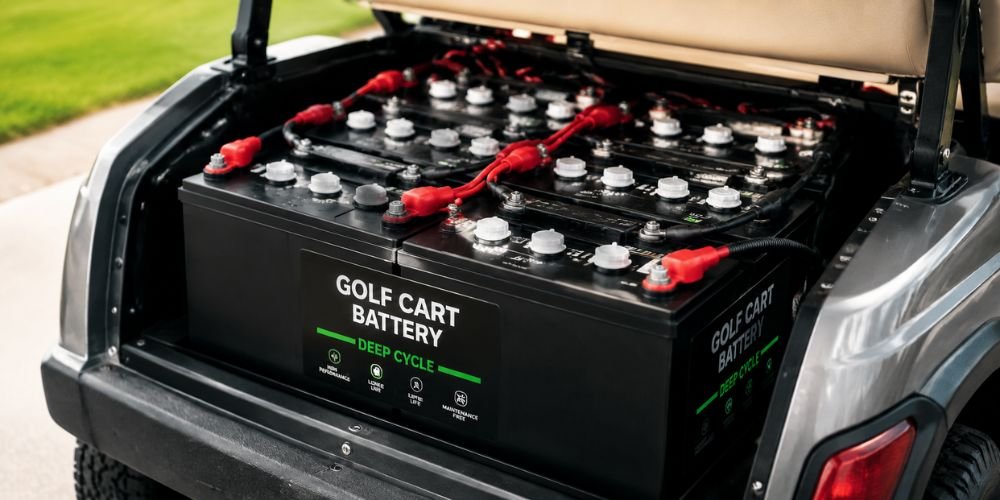
To wire golf cart batteries correctly, connect the batteries in series to increase the total voltage while keeping the same amp-hour capacity. The wiring method depends on whether the golf cart uses a 36V, 48V, or lithium battery system.
What Should Be Checked Before Wiring?
The cart voltage comes first. Traditional lead-acid carts often use several lower-voltage batteries connected in series. A 36V cart may use six 6V batteries. A 48V cart may use six 8V batteries or four 12V batteries.
Lithium setups can be different. Some carts use one 48V pack. Others use 48V modules connected in parallel. Not every lithium battery is approved for series or parallel use, so the battery manual matters.
Before work starts:
- cart switched off with the charger unplugged
- jewellery removed with metal tools clear of open terminals
- a photo of existing cable layout
- confirmed voltage, chemistry and polarity
- replacement of damaged or badly corroded cables
- the cart maker’s wiring diagram nearby
If the layout is unclear, a qualified golf cart technician should handle the connection.
Are Golf Cart Batteries Wired in Series?
Most traditional multi-battery golf carts use series wiring because the cart needs more voltage than one battery can provide.
In series, the positive terminal of one battery connects to the negative terminal of the next. Voltage adds together while amp-hour capacity stays the same. National Battery Supply’s guide to series connections explains the difference in more detail.
Those are common layouts, not a rule for every golf cart. The label on the cart and the battery manual should settle the actual arrangement.
How Are Golf Cart Batteries Connected?
For anyone asking how to wire golf cart batteries, the pattern matters more than memorising where each battery sits.
In a traditional series bank, one battery’s positive post links to the next battery’s negative post. That continues through the pack. The two unused end terminals become the main pack negative and main pack positive connections.
The physical battery positions can vary. Some face opposite directions to keep cable runs short. That is why a generic diagram should not replace the cart’s own wiring layout.
What Should Be Checked Before Power Returns?
Terminals should be clean and dry. Cable lugs should sit flat. Hardware should be tightened to the battery maker’s specification rather than by guesswork.
The final pack voltage should be checked with a suitable meter before the cart is switched on. If the reading does not match the cart’s rated voltage, the wiring needs another look.
What Wiring Mistakes Cause Trouble?
Battery wiring mistakes can stop the cart from running or create heat at a bad connection.
Common Problems Include:
- reversing positive and negative
- leaving one battery out of the series path
- mixing battery voltages or chemistries
- reusing cables with damaged insulation
- stacking too many lugs on one terminal
- leaving terminal hardware loose
A loose or corroded connection can build resistance and heat. A cable that becomes unusually hot during normal use needs inspection rather than another tightening guess.
Does Lithium Wiring Work the Same Way?
Not always.
A lead acid cart converted to lithium may no longer use the original series layout. A single 48V lithium pack already supplies full cart voltage. Some 48V lithium modules are designed for parallel connection, which keeps voltage at 48V while adding capacity.
That is different from putting four 12V batteries in series. The battery’s BMS, charger and cart controller must suit the final setup. Series wiring should never be assumed safe for a lithium battery simply because the terminals allow it.
What Should Be Checked After Wiring?
Once the bank is connected, the pack voltage should match the cart. Cables should be secure with no exposed copper or stretched connections. Hold-downs should keep batteries from shifting.
Charging needs a separate check. The charger must match both pack voltage and battery chemistry. The guide to charging golf cart batteries covers that step because correct wiring with the wrong charger can still damage a new pack.
After a short drive, terminals can be checked for unusual warmth, looseness or a new smell. Sparking, swelling or excessive heat calls for immediate shutdown and professional inspection.
When Is Professional Help the Better Choice?
DIY wiring makes most sense when the original layout is documented and the replacement batteries match the existing system.
Professional help is safer when the cart is being converted to lithium, previous wiring has been modified or pack voltage is uncertain. Accessories such as lights, reducers and aftermarket controllers can add cables that are easy to confuse with the main battery circuit.
Conclusion
Golf cart battery wiring comes down to matching pack voltage with the correct connection pattern. Series wiring is common with traditional lead acid banks, while lithium systems may use a different layout.
When replacement is due, golf cart batteries should be matched to the cart’s voltage, charger and approved wiring configuration before installation begins.
Featured Posts
Request more information
National Battery Supply delivers dependable energy storage solutions tailored to commercial, industrial, and government applications. Our catalog ranges from custom battery manufacturing and UPS systems, portable power stations, to high-capacity solutions like whole-home battery energy storage systems (BESS) and scalable containerized energy storage units- engineered for reliability, flexibility, and rapid deployment.
We support critical infrastructure, telecom, data centers, healthcare, and remote operations with power systems built for performance in demanding environments. Whether it’s deep cycle batteries, lithium forklift replacements, OEM portable power kits, solar backups, and large-scale energy storage systems. We provide tailored solutions with short lead times, custom branding, and bulk pricing.
Our team also specializes in helping integrators, resellers, and developers source complete battery systems for residential microgrids, off-grid power stations, and industrial container setups. Whether you need to back up a home, energize a remote site, or manage facility-wide loads, we have the scalable energy storage options to match.
Contact us today to learn how our advanced power systems can reduce downtime, extend operational capacity, and support your long-term energy goals.
National Battery Supply is a reputable manufacturer specializing in custom battery solutions. With over 20 years of experience, we can manage all your power needs.
Batteries
Compliance
Copyright 2026 © National Battery Supply | UEI: Z66VQCUPCGL3 CAGE: 9UK94