- UEI: Z66VQCUPCGL3 CAGE: 9UK94
- +1 844-539-2555
- Sales@NationalBatterySupply.com
Are LiFePO4 Batteries Safe Indoors?
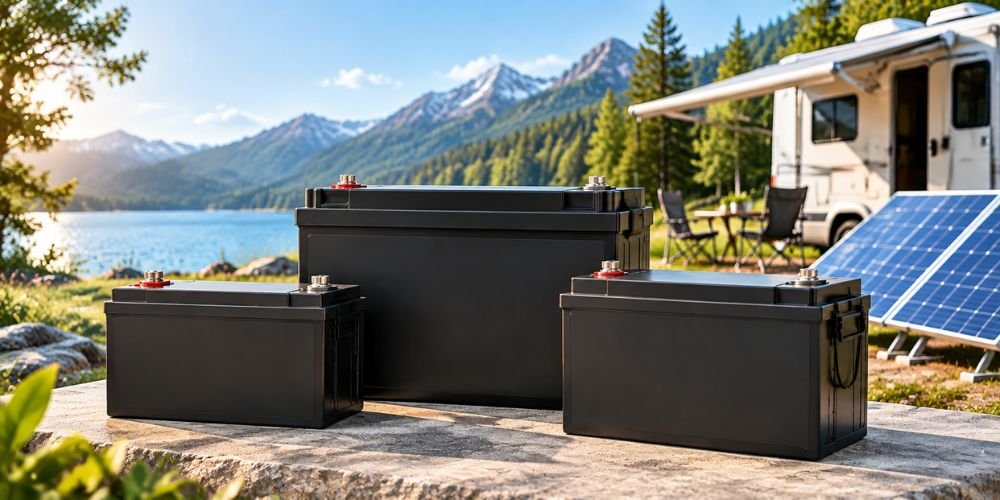
A home battery often ends up in a utility room, garage corner or cupboard near the inverter. LiFePO4 has a reassuring safety reputation, so indoor installation can sound straightforward. The chemistry does have real advantages. Still, a safe cell chemistry does not make every battery pack safe in every room.
Battery size changes the conversation too. Products available through National Battery Supply range from compact packs to larger stationary systems. A small backup battery and a full home energy system need different thinking around clearances, wiring, access and installation.
Why LiFePO4 Has a Safety Advantage
LiFePo4 is lithium iron phosphate. It is thermally stable and less prone to thermal runaway under typical working circumstances than other nickel-rich lithium ion chemistries.
Many serious lithium battery fires are due to thermal runaway. Cell warming may influence nearby cells. LiFePO 4 chemistry to delay chain start-up. It doesn’t stop.
External fires, overcharge, short-circuit, bad connections and physical damage can all be fatal. Before charging or using a bloated battery, check for excess heat, smell, hissing or smoke.
What Still Creates Risk Indoors
A battery can have good cells and still be a poor indoor product. Wiring, fuses, terminals, charger quality and the BMS all influence safety.
The battery management system, usually shortened to BMS, watches voltage, current and temperature. A properly designed unit can interrupt charging or discharging when operating limits are exceeded. That layer matters when nobody is watching the battery.
Certification gives another useful clue. UL 9540 covers complete energy storage systems. UL 9540A evaluates thermal runaway behaviour and fire propagation. NFPA 855 addresses installation of stationary energy storage systems. Local requirements still vary, so the approved installation location and manufacturer instructions remain important.
Choosing the Right Indoor Location
A dry utility area often makes more sense than a bedroom or a cramped cupboard. Water, direct heat, accidental impacts and piles of household storage are all things a battery is better kept away from.
Homes with fitted Utility Rooms can keep electrical equipment separate from sinks, detergents and laundry clutter. A practical guide to designing a utility room also shows why appliance spacing, ventilation and service access need to be planned before cupboards take over the available wall space.
The battery manufacturer’s clearance instructions come first. A tidy looking room is not a safe room if a technician cannot reach the isolation switch or if airflow around the enclosure has been blocked.
Do Not Box the Battery Into Furniture
There is a natural temptation to hide technical equipment. National Battery Supply and it’s Media Units do exactly that for televisions, routers and everyday cables. A high capacity battery is different. It should not be tucked behind a furniture door unless the battery manufacturer specifically allows that type of enclosure.
The same caution applies elsewhere. Ideas used for cleaner utility room decor often rely on closed cabinets and hidden storage. Those ideas work well for ordinary household items. Battery enclosures still need their specified clearance, ventilation and service space.
Charging, Heat and Cold Still Matter
Indoor temperatures are generally easier on LiFePO4 batteries than a freezing shed or a sun baked outdoor box. Heat can still shorten service life and push equipment outside its rated range.
A battery beside a boiler, radiator or strongly heated window is a poor location even if the room itself feels convenient. Cold charging creates another issue. Many LiFePO4 cells should not be charged below freezing unless suitable low temperature protection or heating is built into the system.
The charger matters just as much. A unit designed for the battery voltage and chemistry is preferable to an improvised replacement. Loose terminals, undersized cables or badly made connections can create local heat even when the battery cells remain healthy.
Does Indoor Use Require Ventilation?
LiFePO4 batteries do not normally release hydrogen during routine charging in the way flooded lead acid batteries can. That fact sometimes gets simplified into “no ventilation needed.”
Abnormal failure is different. Lithium cells can vent hot gases when damaged or driven into a serious fault. Larger indoor energy storage systems can therefore have specific requirements for room layout, separation, ventilation and fire protection. The exact rules depend on system size, product certification and local code.
A homeowner should not guess those details from chemistry alone. For a permanently installed system, the product documentation plus the local electrical and fire requirements are the useful references.
Quick Indoor Safety Check
A sensible indoor setup usually has a few things in common:
- The battery is approved for the intended location.
- The BMS includes the protections specified by the manufacturer.
- The charger matches the battery.
- Cables, fuses and disconnects are correctly sized.
- The enclosure stays dry, clear and easy to reach.
- Required professional installation or local approval is completed.
None of those checks is dramatic. Together, they make far more difference than a “safe chemistry” label on its own.
Conclusion
So, are lifepo4 batteries safe indoors? In many properly designed installations, yes. LiFePO4 has a strong safety profile, but product quality, charging equipment, temperature, placement and installation standards still decide how safe the finished setup is.
Anyone comparing LiFePO4 batteries should look past capacity alone. BMS protection, certification, temperature limits and the manufacturer’s approved installation location say much more about whether a battery belongs inside a particular building.
Featured Posts
Request more information
National Battery Supply delivers dependable energy storage solutions tailored to commercial, industrial, and government applications. Our catalog ranges from custom battery manufacturing and UPS systems, portable power stations, to high-capacity solutions like whole-home battery energy storage systems (BESS) and scalable containerized energy storage units- engineered for reliability, flexibility, and rapid deployment.
We support critical infrastructure, telecom, data centers, healthcare, and remote operations with power systems built for performance in demanding environments. Whether it’s deep cycle batteries, lithium forklift replacements, OEM portable power kits, solar backups, and large-scale energy storage systems. We provide tailored solutions with short lead times, custom branding, and bulk pricing.
Our team also specializes in helping integrators, resellers, and developers source complete battery systems for residential microgrids, off-grid power stations, and industrial container setups. Whether you need to back up a home, energize a remote site, or manage facility-wide loads, we have the scalable energy storage options to match.
Contact us today to learn how our advanced power systems can reduce downtime, extend operational capacity, and support your long-term energy goals.
National Battery Supply is a reputable manufacturer specializing in custom battery solutions. With over 20 years of experience, we can manage all your power needs.
Batteries
Compliance
Copyright 2026 © National Battery Supply | UEI: Z66VQCUPCGL3 CAGE: 9UK94