- UEI: Z66VQCUPCGL3 CAGE: 9UK94
- +1 844-539-2555
- Sales@NationalBatterySupply.com
Best Portable Power Stations for Camping
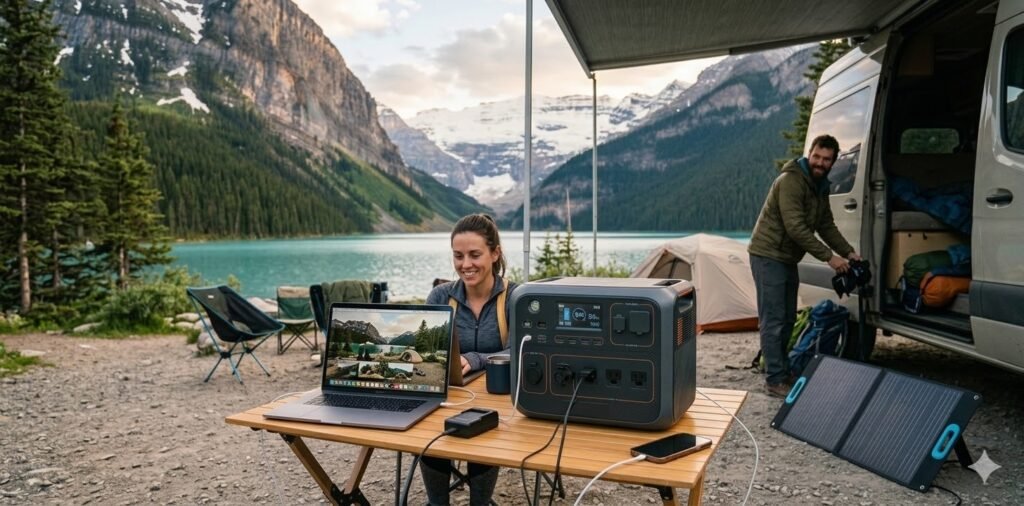
Nobody thinks about power until they need it. That is genuinely how most people end up in this situation. Two days into the trip, the phone was at 8 percent, the cooler making questionable noises and a quiet realization that a better decision could have been made before leaving the driveway.
A portable power station fixes this. After all, the expertised status of National Battery Supply already acknowledges enough how the right portable power stations during camping can be effective.. But buying the wrong one creates a different version of the same problem.
The Part That Catches People Off Guard
The camping power market is not straightforward. Every product page says “perfect for outdoor adventures” and every wattage number sounds impressive until the second night rolls around and things start dying.
What actually happens on a camping trip is nothing like the controlled demo on a product page. Sun is inconsistent. Multiple devices run at once. Someone decides the coffee maker is non-negotiable. The numbers that looked fine in a browser tab stop adding up in the field.
There is also a basic mismatch that most buyers do not catch until after: units designed for home backup power behave differently than units designed to move around, sit in a truck bed, charge from a panel on a folding table and actually survive outdoor conditions. Same category, different product entirely.
Battery Chemistry First, Everything Else Second
Most people skip this. They look at watt-hours, look at price and make a decision. The battery chemistry question is more important than both.
Two types dominate the market right now. NMC lithium and LiFePO4 lithium.
NMC is lighter and fits more energy into a smaller package. Sounds like the obvious pick. The problem is it runs hotter, degrades faster under real use and most NMC units are rated for 500 to 800 charge cycles before capacity starts noticeably dropping. Someone who takes two or three camping weekends a year might not feel that for a while. Someone who uses theirs regularly will.
LiFePO4 is heavier. Full stop, it is heavier. But it runs cooler in warm outdoor temperatures, handles repeated charging better and the cycle life is typically 2,000 to 3,500 cycles. For camping specifically, thermal stability matters. Leaving a power station in a hot car or a sun-exposed tent is not an unusual situation. LiFePO4 handles that better.
The chemistry comparison between lithium types is worth actually reading before buying, not just glancing at. What LiFePO4 batteries deliver versus other lithium options is a longer conversation than most product pages allow for.
Watt-Hours: The Number Worth Caring About
Watt-hours tells how much total energy a unit holds. Output wattage tells how fast it can deliver power. Both numbers matter. Watt-hours matters more for camping because it determines how long things actually run before the station needs recharging.
A 1,000Wh station running a 100W device theoretically runs for ten hours. Real-world conditions knock that down somewhat due to inverter losses and mixed loads. Close enough to plan around, just not exact.
A short trip with just phones and a laptop? Something in the 300-500Wh range works. Add a CPAP machine or a cooler to that list and the floor jumps to 700-1,000Wh minimum, not as a stretch goal but as a genuine baseline. Both running together plus anything else drawing power and 1,000Wh starts feeling tight by day two.
The most common mistake is buying too small. The second most common is not accounting for how devices get used simultaneously rather than one at a time.
What Actually Matters in a Camping-Ready Unit
Solar Input
This one has a catch most listings bury. Maximum solar input wattage is a hard ceiling on the unit side, not the panel side. A 300W panel connected to a station with a 150W solar input limit is still a 150W input. The station is the bottleneck. Both numbers need to match up before buying either piece separately.
Output Ports
AC outlets for anything with a standard wall plug. USB-C for phones and newer laptops. USB-A for older devices. A 12V DC port for coolers and accessories. All four together covers essentially everything that goes on a camping trip.
Pass-Through Charging
This is the ability to accept incoming solar power while simultaneously running devices off the same unit. Sounds basic. Not all stations handle it cleanly and some get warm doing it. Worth checking in reviews, not just the spec sheet.
Weight and Carry Design
Thirty pounds feels fine in a store. Thirty pounds carried across an uneven campsite twice a day is a different experience. Handle quality is not cosmetic. Some are genuinely uncomfortable after about forty feet.
Display
Live battery percentage plus real-time input and output wattage. Those two numbers together make managing a multi-day trip with variable solar input actually possible. Without them, it is guesswork.
A portable power station built for outdoor use approaches these features differently than something sized for sitting under a desk.
Solar Pairing Is What Makes Off-Grid Trips Actually Work
A power station without a solar panel is a countdown. It starts full, drains down and eventually the trip reorganizes around it.
Solar changes that dynamic. A 100W panel in reasonable sun adds roughly 300-500Wh over a full day depending on how it is positioned, how much cloud cover exists and panel efficiency. Two hundred watts roughly doubles that under the same conditions. Sized right, a station can stay topped up across an entire weekend without once needing a wall outlet.
The pairing part matters and the numbers can look confusing at first. Amps, volts, watts, connector compatibility. It is less complicated than it appears once the logic clicks. What amps, volts and watts actually mean in a real setup is the kind of background that makes reading specs useful rather than noisy.
Portable solar panels built for camping fold down flat, connect directly to most modern stations and weigh far less than they used to. For anyone planning more than one or two off-grid trips in a year, factoring the panel into the original purchase decision makes more sense than adding it later.
Conclusion
Short trip, phones and laptop, no appliances: 500-700Wh covers it.
Add a CPAP or a cooler: 700-1,000Wh, non-negotiably.
Multiple people, longer stay, cooking gear and full device load: 1,500Wh and above, paired with solar from the start.
The pull toward buying smaller is real. Smaller costs less. Smaller is lighter. Smaller fits easier. It is also the reason people end up buying twice, because the first unit kept running short on night two and collecting dust by summer’s end.
The right station, the right chemistry, the right solar pairing. That combination works for years without much thought. Getting there on the first purchase is entirely possible. It just requires asking slightly different questions than the ones most product pages answer.
Featured Posts
Request more information
National Battery Supply delivers dependable energy storage solutions tailored to commercial, industrial, and government applications. Our catalog ranges from custom battery manufacturing and UPS systems, portable power stations, to high-capacity solutions like whole-home battery energy storage systems (BESS) and scalable containerized energy storage units- engineered for reliability, flexibility, and rapid deployment.
We support critical infrastructure, telecom, data centers, healthcare, and remote operations with power systems built for performance in demanding environments. Whether it’s deep cycle batteries, lithium forklift replacements, OEM portable power kits, solar backups, and large-scale energy storage systems. We provide tailored solutions with short lead times, custom branding, and bulk pricing.
Our team also specializes in helping integrators, resellers, and developers source complete battery systems for residential microgrids, off-grid power stations, and industrial container setups. Whether you need to back up a home, energize a remote site, or manage facility-wide loads, we have the scalable energy storage options to match.
Contact us today to learn how our advanced power systems can reduce downtime, extend operational capacity, and support your long-term energy goals.
National Battery Supply is a reputable manufacturer specializing in custom battery solutions. With over 20 years of experience, we can manage all your power needs.
Batteries
Compliance
Copyright 2026 © National Battery Supply | UEI: Z66VQCUPCGL3 CAGE: 9UK94